I. Introduction
As introduced by Knight in “Black Ribbon for Mourning: Affective Solidarity and Feeling Very Difficult Data” [1], the quantified self movement (also commonly referred to as self-tracking or lifelogging) [2] has been growing and sweeping the nation for over a decade [3]. It has primarily brought attention to user-centered tracking of health data, where users commonly monitor such clinical and health metrics as diet, weight, blood pressure, and physical activity [4]. Self-tracking is often facilitated through popular mobile applications including Apple Health or Fitbit, the latter of which pairs with an external Fitbit device [5].
Despite the popularity of tracking health vitals, self-tracking of data has also extended beyond common clinical metrics like diet or blood pressure. Users increasingly engage with the quantified self by tracking key aspects of their daily lives [6], such as goals, mood, mental health, and finances. For instance, during the COVID-19 pandemic, the popularity of the mobile app Calm rose significantly as users sought to manage their mental health and mindfulness [7]. In quantifying aspects of themselves and their lives, users reference their self-collected data to plan and achieve goals, visualize personal changes and trends over time, and organize or share information about themselves.
Given these goals, users of self-tracked data may benefit in their practices from incorporating mnemonic devices to reinforce important thoughts, activities, or goals. Mnemonic devices have long been touted as tools to improve learning and memory [8], where classic examples like the phrase “Every Good Boy Does Fine” have been used in music education to remember the five lines of the treble clef staff (E, G, B, D, and F). Studies also indicate the utility of visual and tactile techniques to strengthen memory and learning, with evidence suggesting these approaches may be more effective than auditory methods [9]. The act of crafting presents a viable tool integrating both visual and tactile stimulation to enhance memory, especially since crafts convey meaning to both creators and users who experience their multisensory qualities [10]. The act of making activates both learning and memory by facilitating the intake, processing, and storage of new information [11]. In this process, new knowledge is reinforced and committed to memory, making learning through creation an embodied cognitive experience [12].
I thereby propose the “mnemonic bracelet,” a physicalization of quantified-self data that users can create to remind themselves of their goals, emotions, achievements, and thoughts, with a combined tactile and visual component. The mnemonic bracelet is a self-created bracelet made via knotting, weaving, beading, and/or other techniques—much like a “friendship bracelet”—that offers a tactile and visual physicalization of quantified-self data. It may be used to represent and encourage mindfulness of one’s emotions, goals, and thoughts over a period of time and through all stages of its creation and use, whether the end product is worn or displayed. The mnemonic bracelet reinforces learning and memory not only through the making process [13], but also through its role as a mnemonic tool for cognitive offloading, or reducing the mental effort required for processing a task, particularly within the constraints of short-term working memory [14]. In serving as a physical reminder of goals and memories that might otherwise occupy the mind, the mnemonic bracelet may help alleviate the cognitive burden of holding and recalling these ideas.
II. Overview of Methodology
The mnemonic bracelet may be used for several purposes, including to increase mindfulness of emotions, to remind oneself of key goals and achievements or milestones throughout the week, and to visualize changes over a period of time. Users can and should adapt the focus, timeline, and specifications of their mnemonic bracelet to their individual needs.
To complete a data physicalization project like that outlined in part III, participants will engage in a simple, week-long data collection process. Each day, participants will spend five to ten minutes tracking their emotions, thoughts, and goals in a physical format [15], and this quantified-self data will then be analyzed and codified with colors, beads, and knot sequences.
After collecting their data, participants will use it to create a mnemonic bracelet that will physically represent their codified data and help them practice mindfulness surrounding their emotions, goals, and achievements. The activity below involves creation of one bracelet for the entire week, whereby a large knot will separate each day of the week. Users may alternatively opt to create a more “detailed” bracelet for each day of the week, but the focus will be on the former—a week-long bracelet—where a sample schema might include the following:
- Emotions as colors of the woven threads: Blue for calmness, red for frustration, orange for joy, yellow for focus, purple for inattention, black for sadness, etc. [16];
- Goals as beads of different shapes, sizes, and colors: A small blue glass bead for a particular long-term goal, a small red glass bead for a second long-term goal, a large red plastic bead for a particular goal with a fast-approaching deadline, etc.
- Knot colors and sequences as emotions: Alternate the order and frequency in which a thread is used to create left-hand knots so that a dominant color and/or pattern emerges.
Please note that this is a sample schema and that users can revise the project creatively to suit their preferences and needs.
III. Instructions with Sample Project
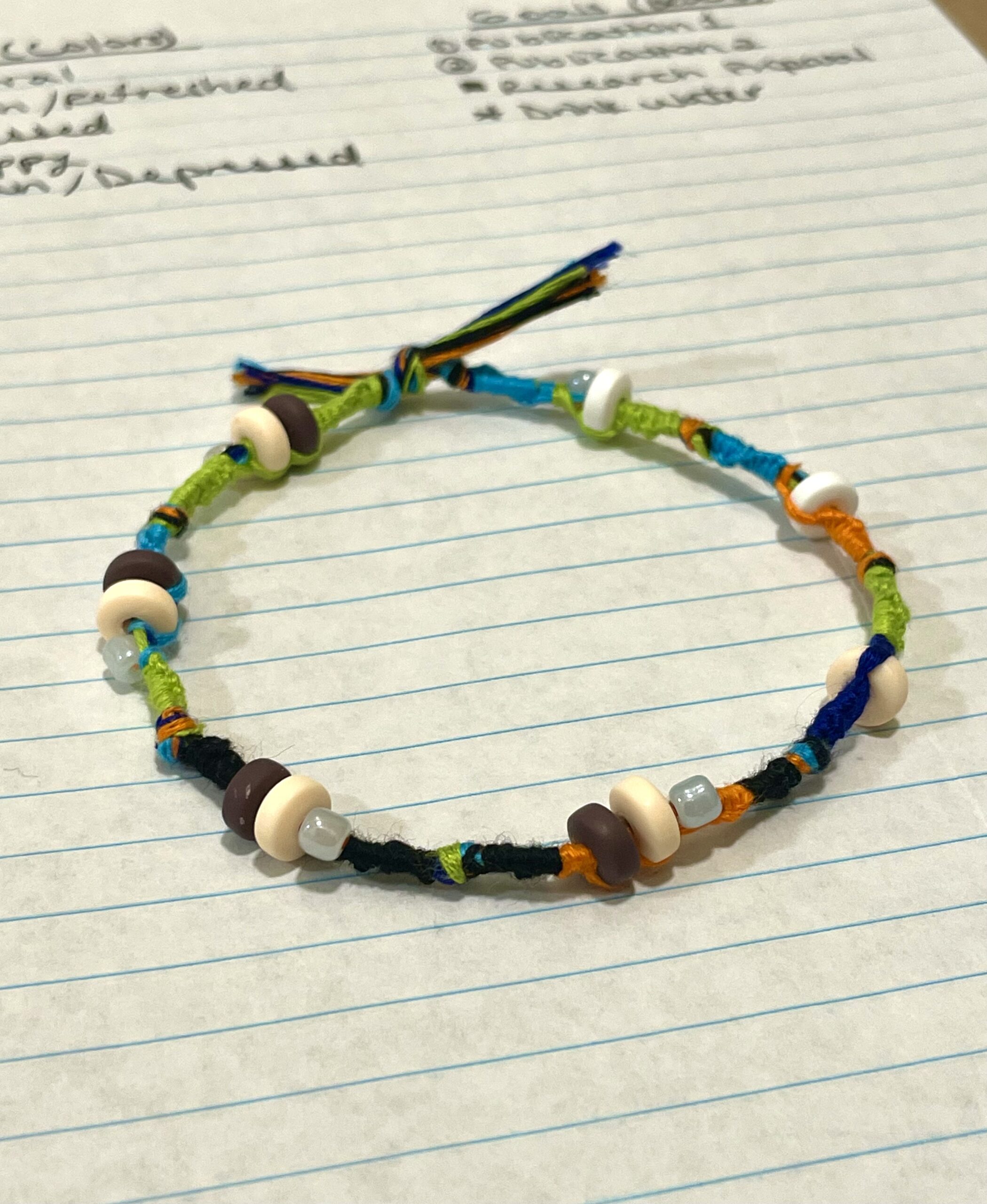
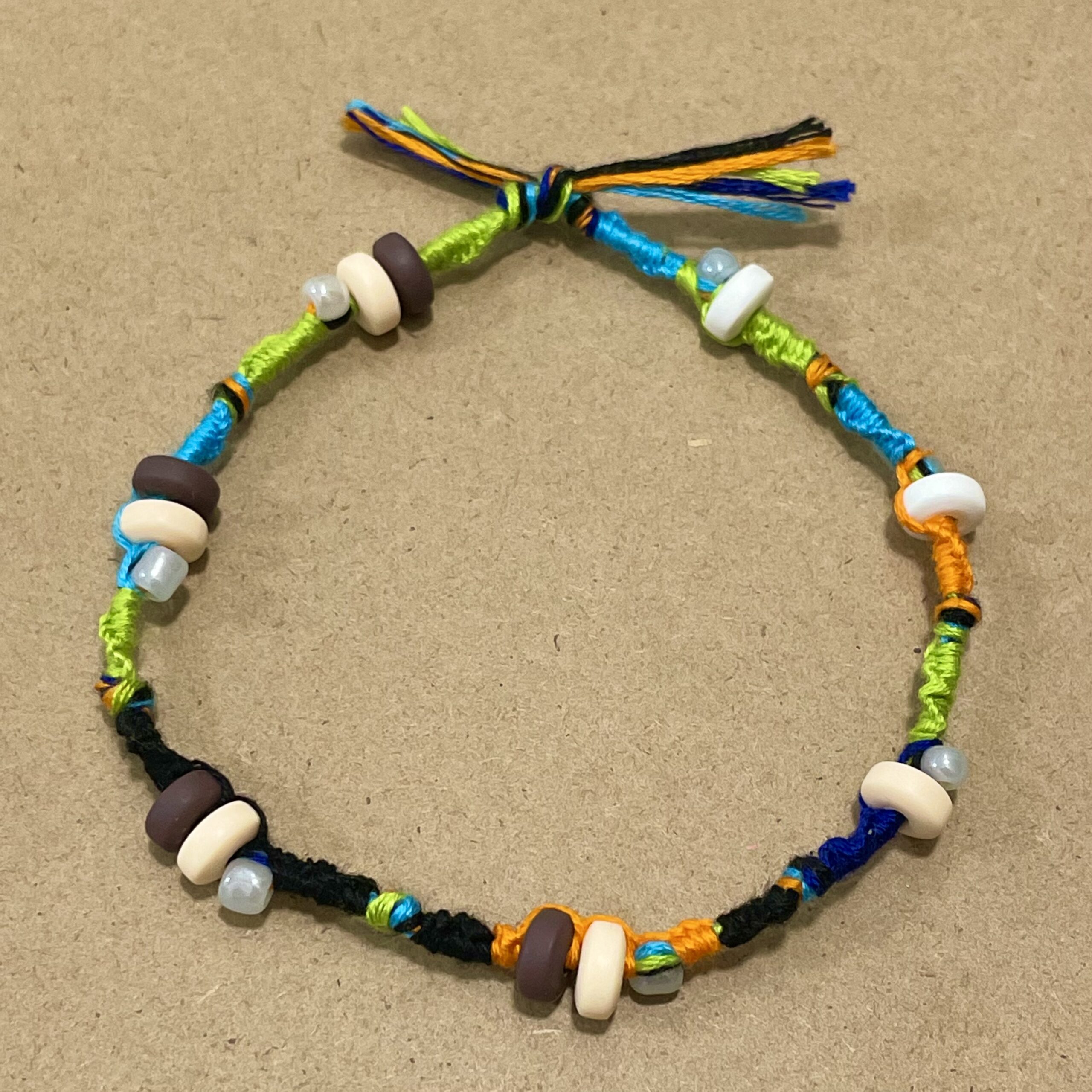
Figure 1. Mnemonic bracelet completed according to part III specifications.
For the purposes of the following project, the sample user and their data is loosely based on the author, who identifies as neurodivergent.
Suppose the sample user seeks to physicalize their data with three mnemonic goals: to increase mindfulness of their emotions, to remind themselves of key achievements and work goals throughout the week, and to visualize daily changes in these dimensions over a week-long period. However, users can and should adapt the focus, timeline, and specifications of their mnemonic bracelet to their individual needs.
A. Materials
The following materials will be needed for this particular project. Substitutions may be made depending upon a user’s project and preferences.
- Five colors of embroidery floss
- A clipboard, or a flat surface and object for securing thread (e.g., tape, a binder clip)
- A notebook or journal (to track data) [17]
- Seven writing utensils of assorted colors (to denote recurring moods and goals of significance) [18]
- Four beads of assorted colors, shapes, and/or sizes
- A ruler
- Scissors
B. Procedure and Sample Project
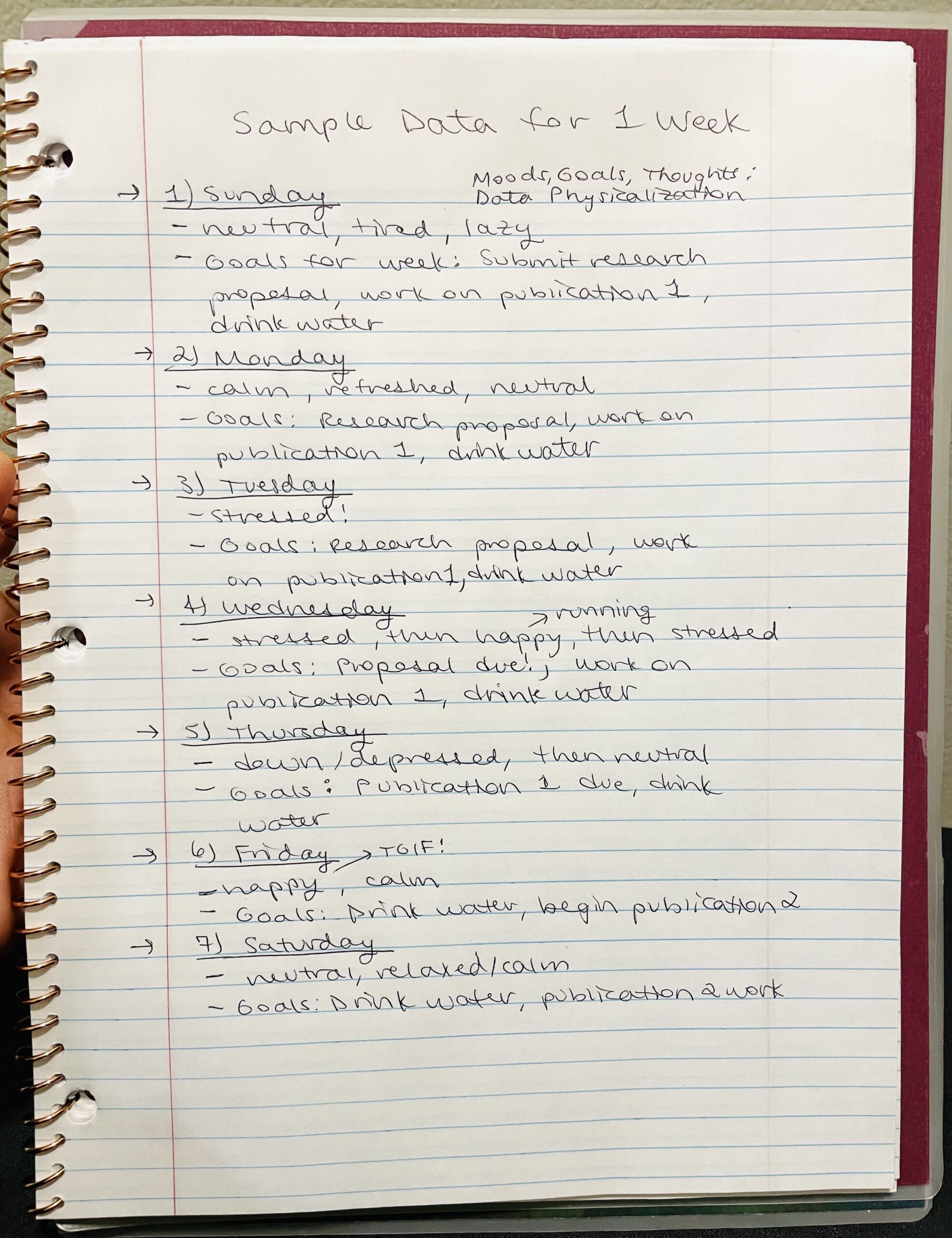
- The first step involves the tracking of quantified-self data by engaging in a simple, week-long data collection process: Each day, spend five to ten minutes tracking your emotions, thoughts, and goals in a designated journal. This stage may result in raw data with a significant amount of detail, but this data will be simplified, analyzed, and codified in the steps that follow. For the sake of clarity and brevity, Figure 2. below represents an abbreviated sample weekly log.
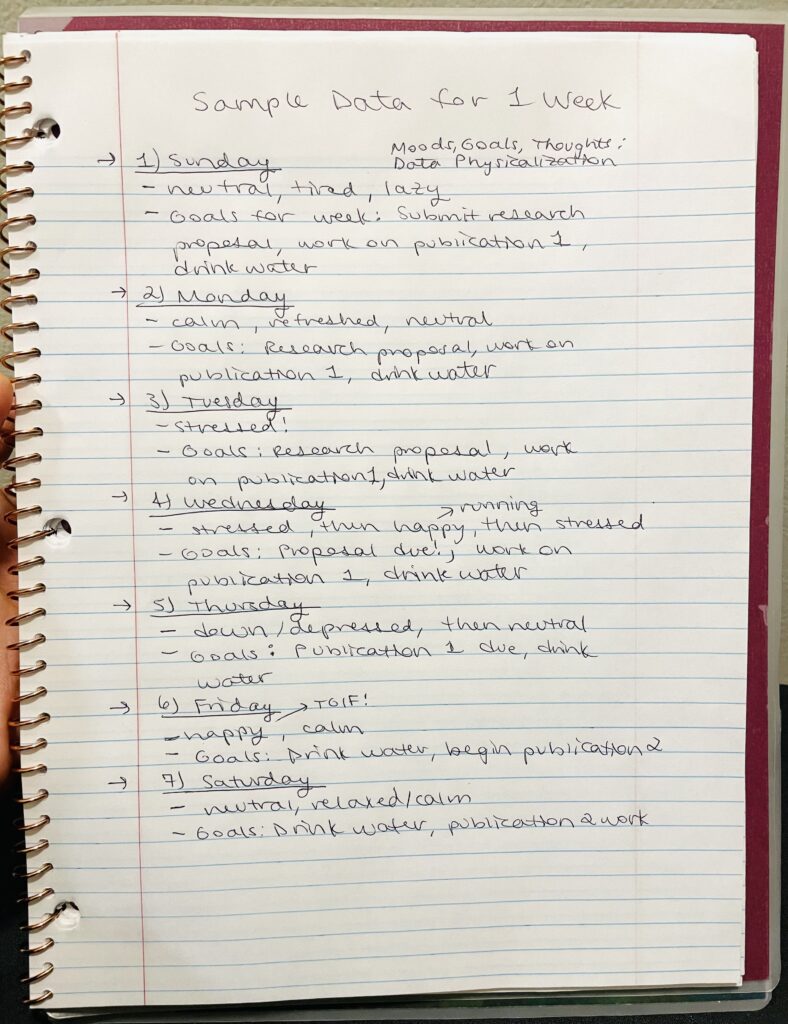
Figure 2. Step 1: Sample data (abbreviated for clarity) for one-week data collection process.
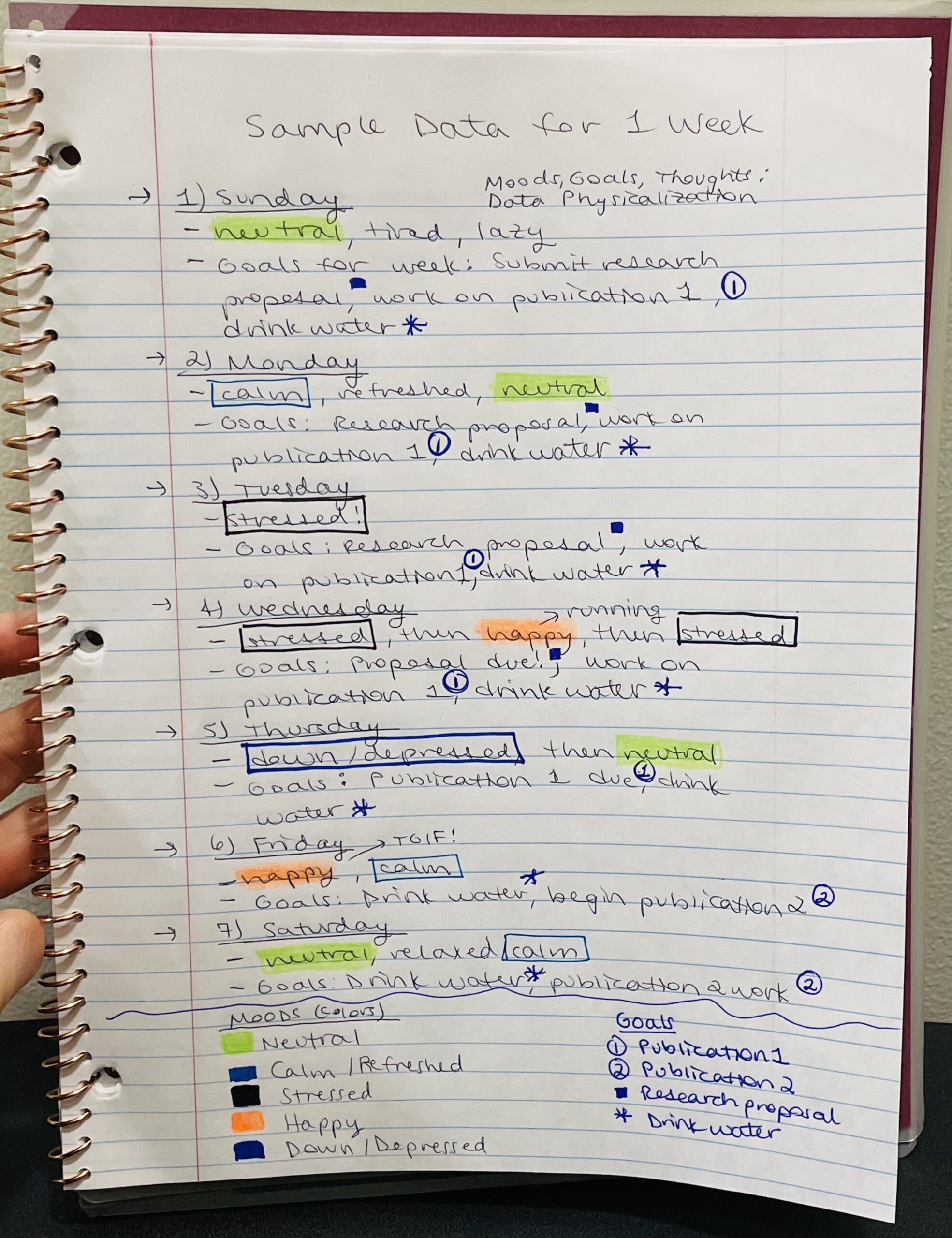
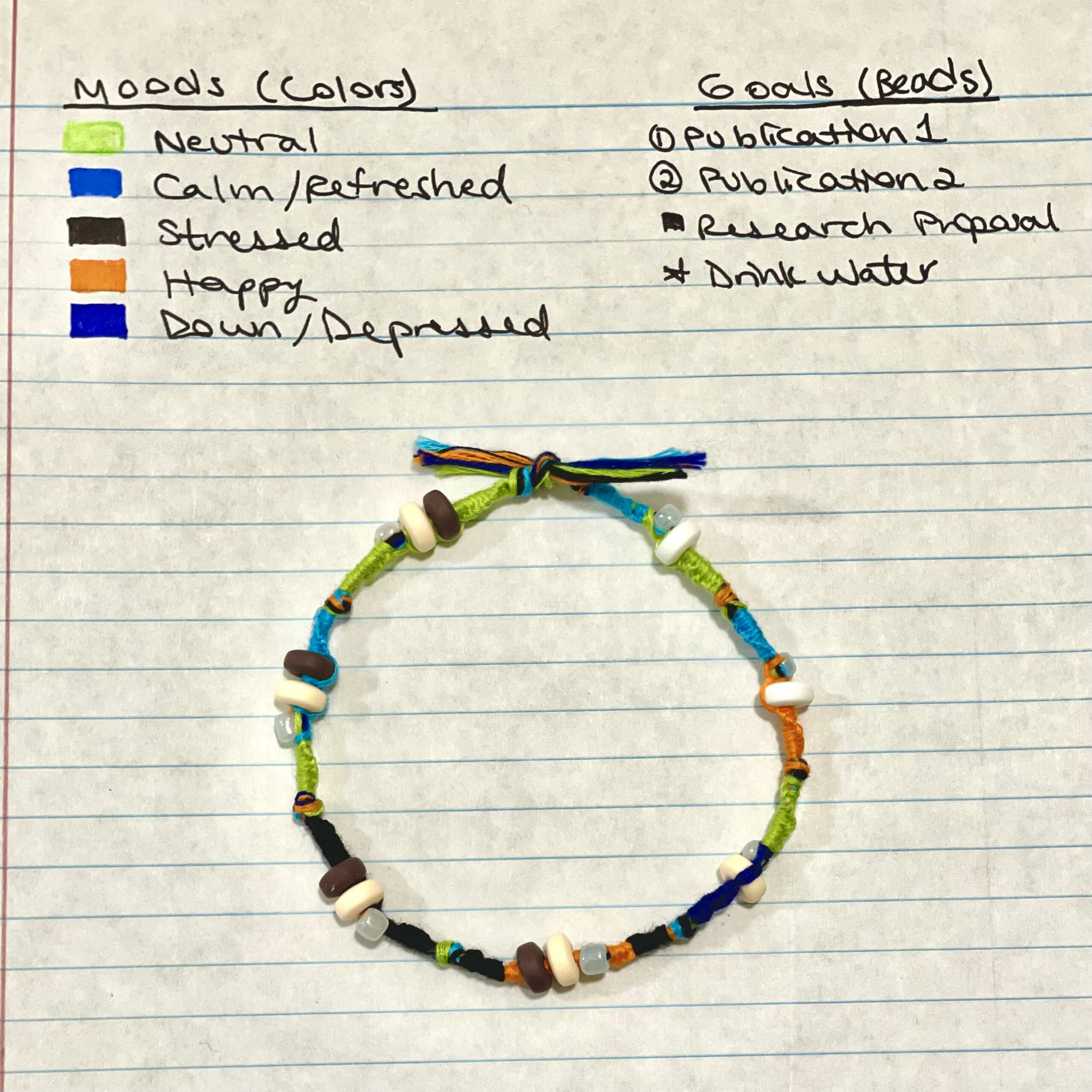
- Once you have collected your data for each day of the week, the next step is to review your data and note common patterns, then codify your data through annotation, including using colors, shapes, text, and other notes or marginalia that will best support your abilities and needs. The focus will be to identify dominant emotions or moods that recur on a given day or across days, as well as to identify goals from the week. For the sample project below, a system of color-coding, shapes, numbers, and symbols were used to denote recurring moods and goals of significance. Consider that the color green is assigned to the mood designated “neutral,” and a light blue is designated for the mood “calm/refreshed” (please note that the light blue shade appears darker in Figures 3. and 4. below).
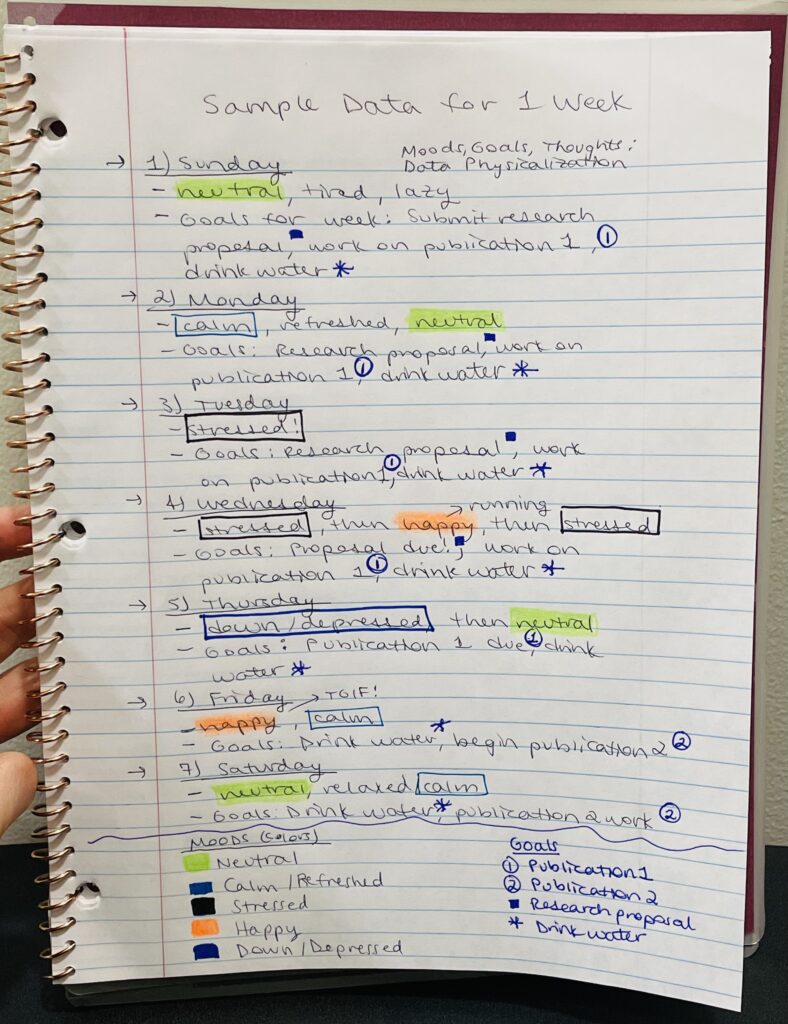
Figure 3. Step 2: Analyzed and codified sample data (abbreviated for clarity) with annotations.
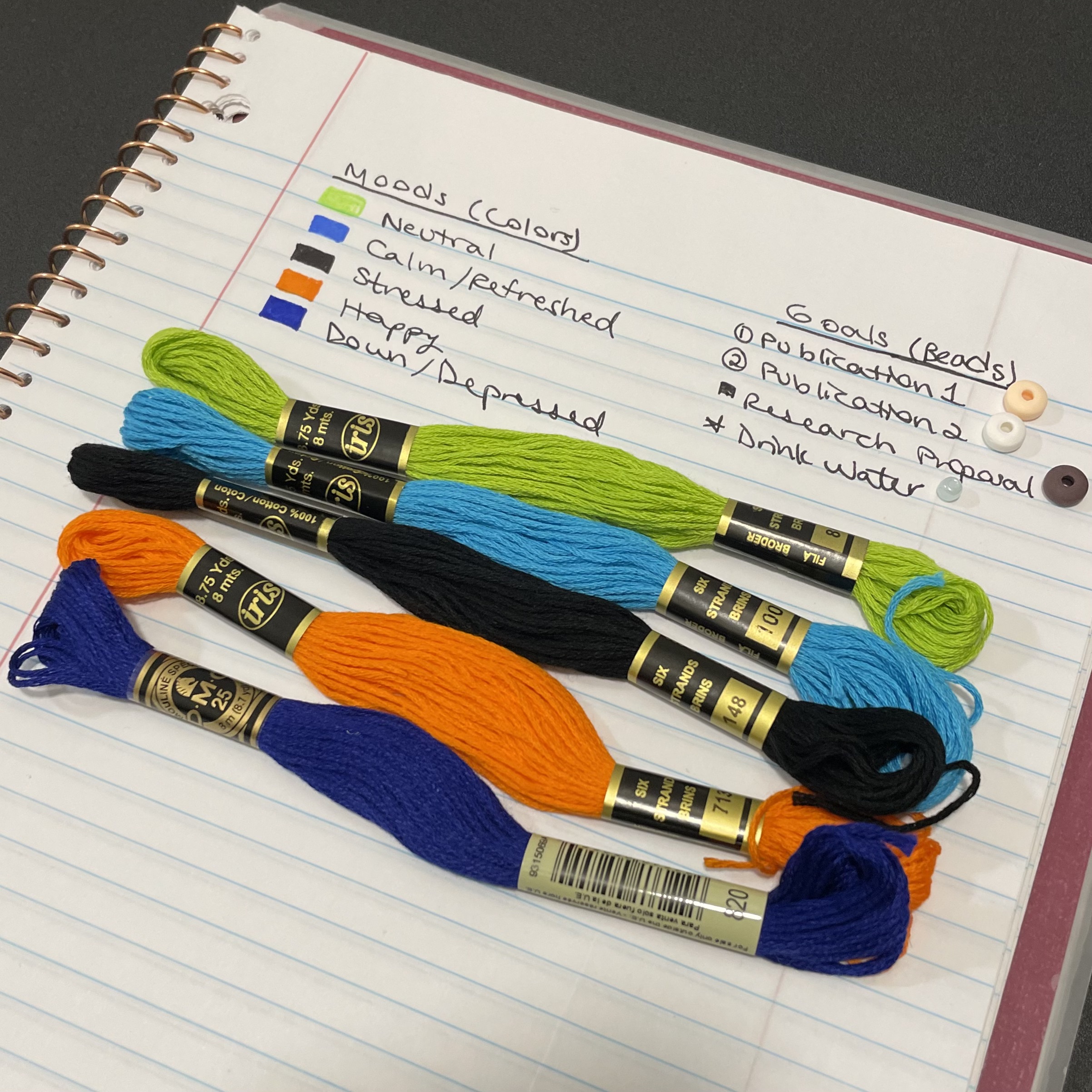
- Now that the data has been codified, assign a unique embroidery thread color to each mood identified, and assign a unique bead to each goal identified. This step represents the assignment of physical components to each data point for the mnemonic data physicalization process.
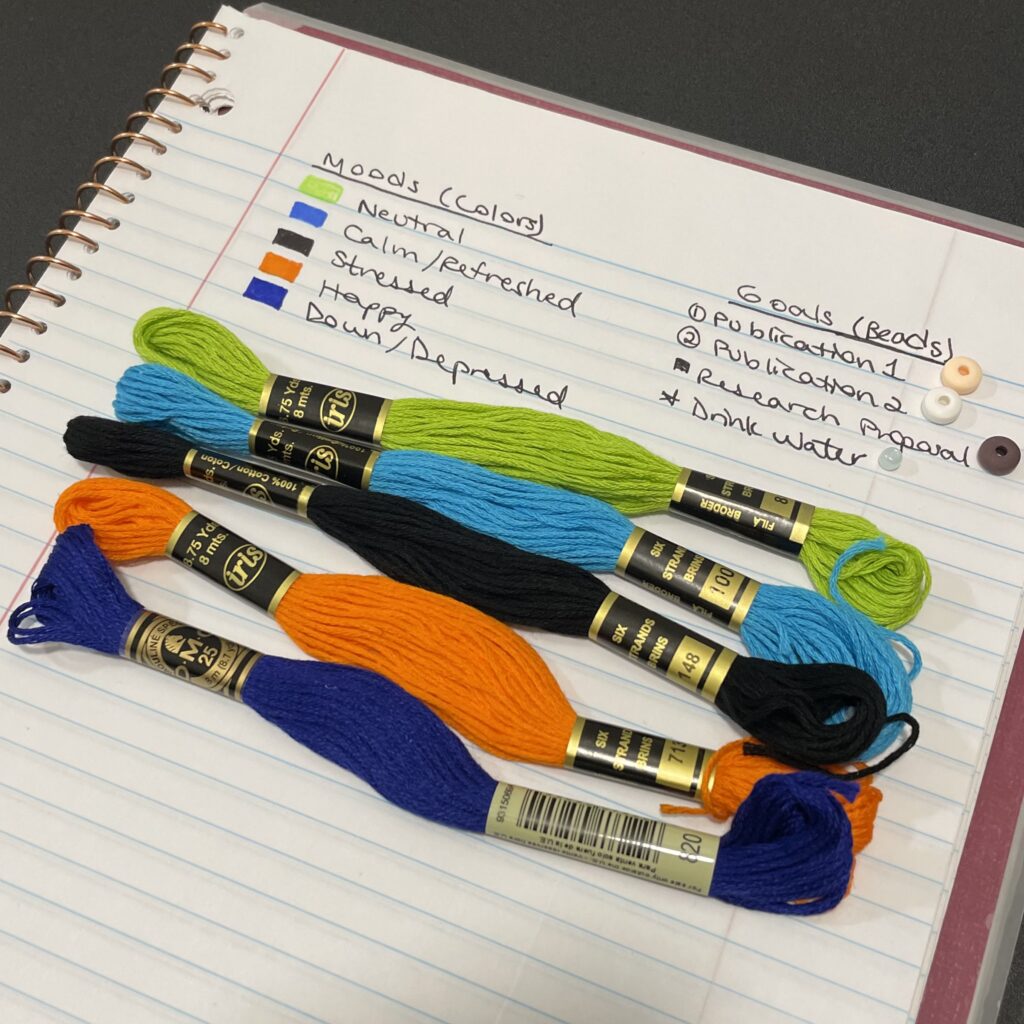
Figure 4. Step 3: Assigning each data point a corresponding physical component for mnemonic physicalization.
- Measure your wrist size using one of the embroidery threads, wrapping a thread around your wrist and then measuring the noted length with a ruler. (The author’s wrist is roughly 7 inches in circumference.) Then, multiply this measurement by 3 or 4 to achieve the length to which you will cut your embroidery threads. (Note: The author used 28-inch lengths of thread, or 4 times their wrist size. After finishing their project, 13 inches of thread remained on the shortest thread. However, your length may vary depending on the tightness of your knots, the size of your chosen beads, and other factors.)
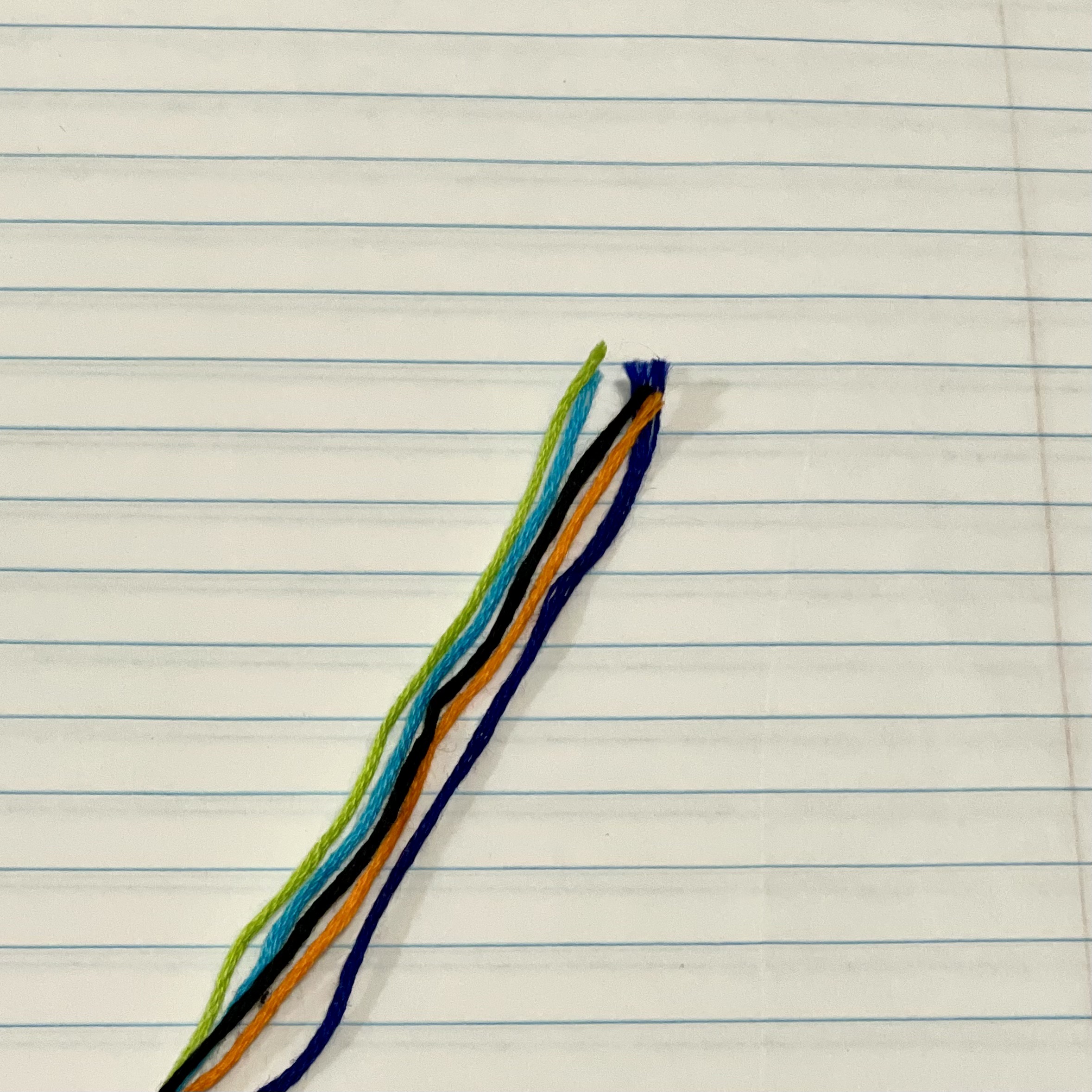
- Using the length you determined in step 4, cut one thread of each of the five embroidery thread colors, which will result in a thin and delicate bracelet like the author’s. (Note: If you would like to opt for a chunkier looking bracelet, you may cut two or three threads for each color, but you will need to extend the length of each thread by roughly 6-12 inches or more per additional thread per color. Please experiment with the length, as this will depend on your wrist size as well.)
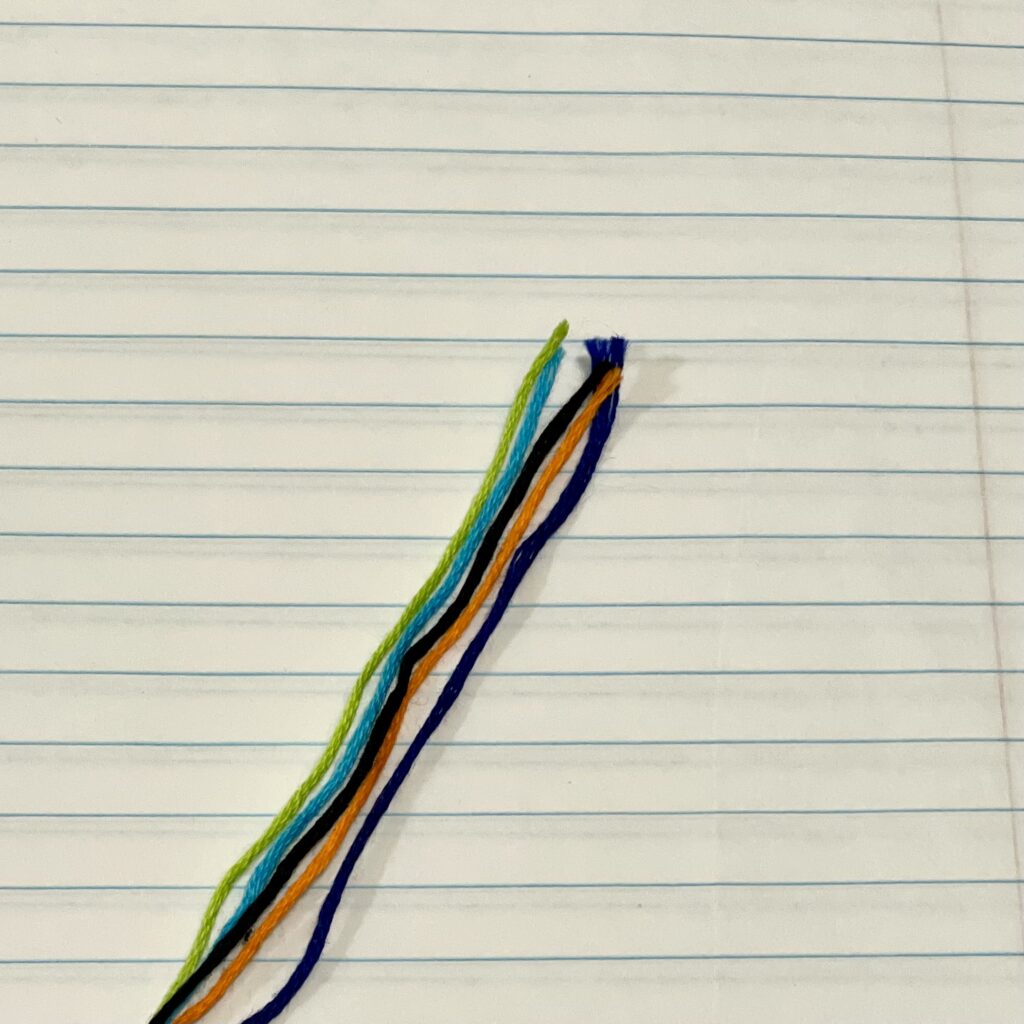
Figure 5. Step 5: Cut embroidery floss threads, one per color (five total).
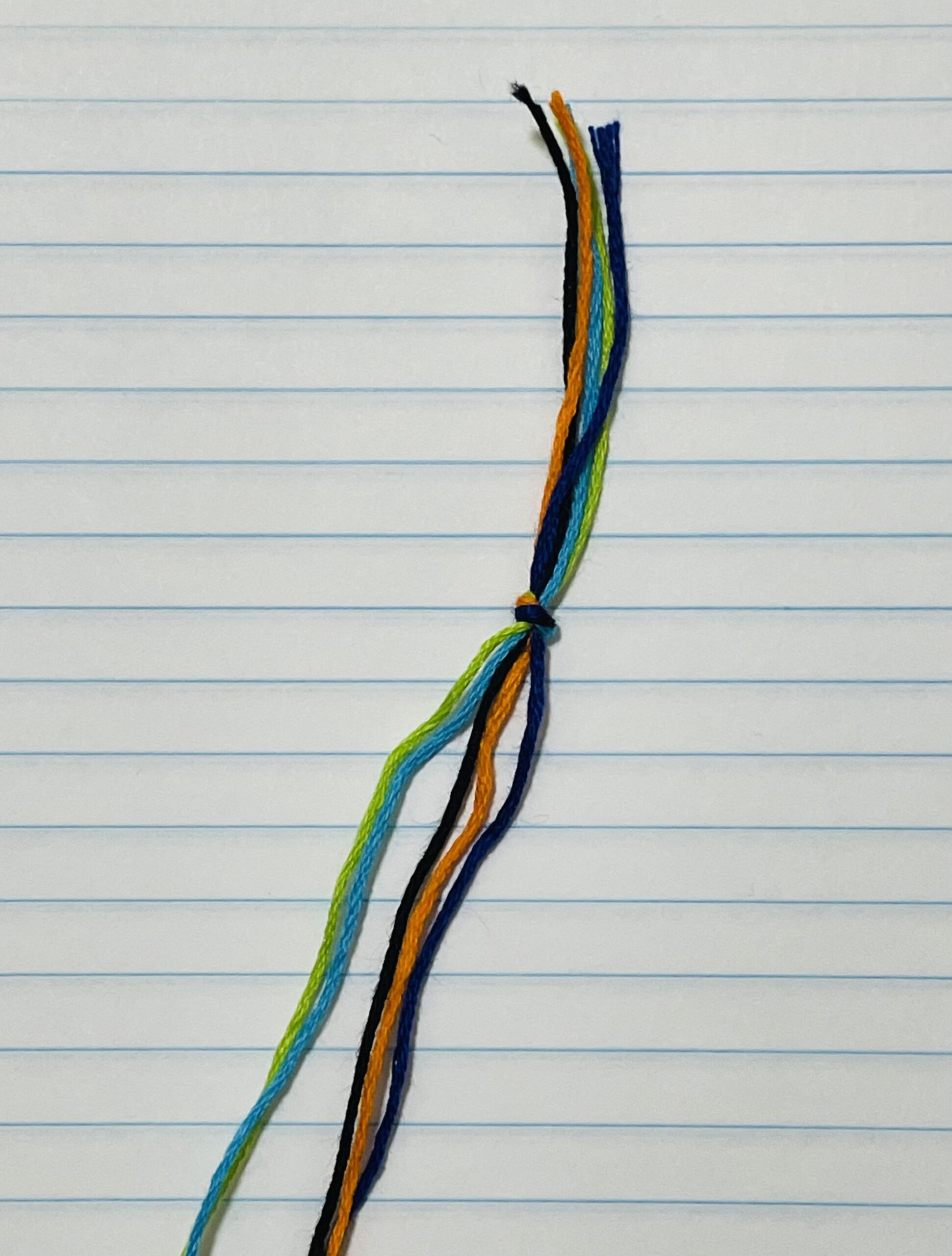
- Now, knot your five threads together 2 inches from the top; this 2-inch “margin” will be used to tie the bracelet ends once it is completed.
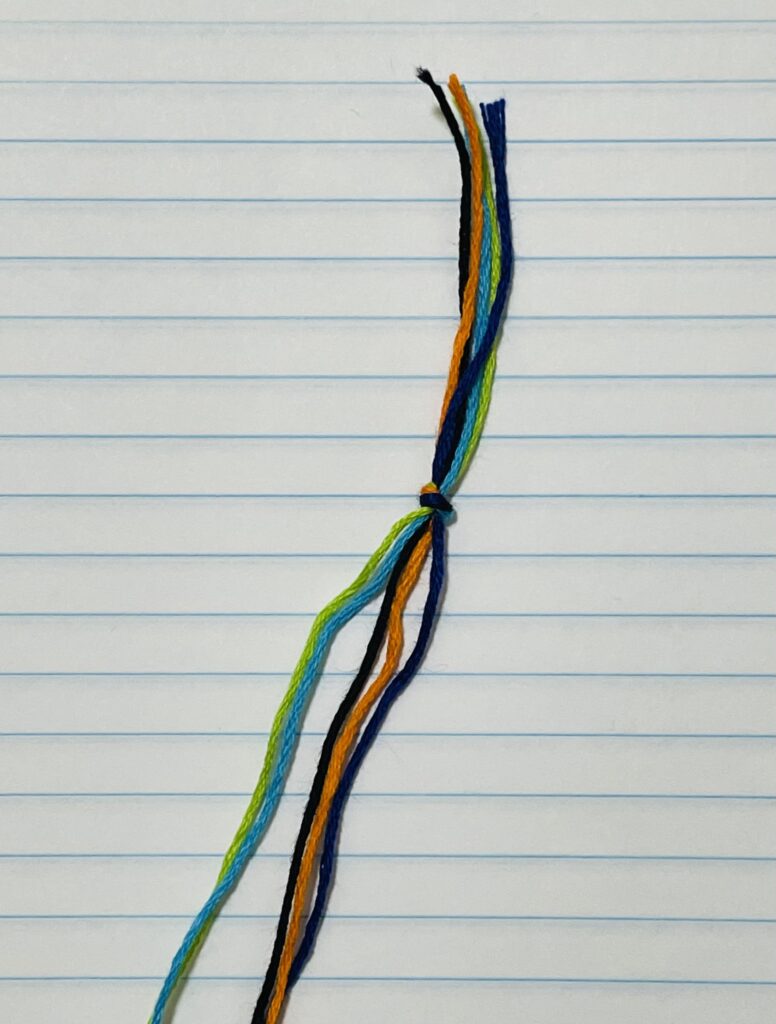
Figure 6. Step 6: Knot your threads about 2 inches from the top.
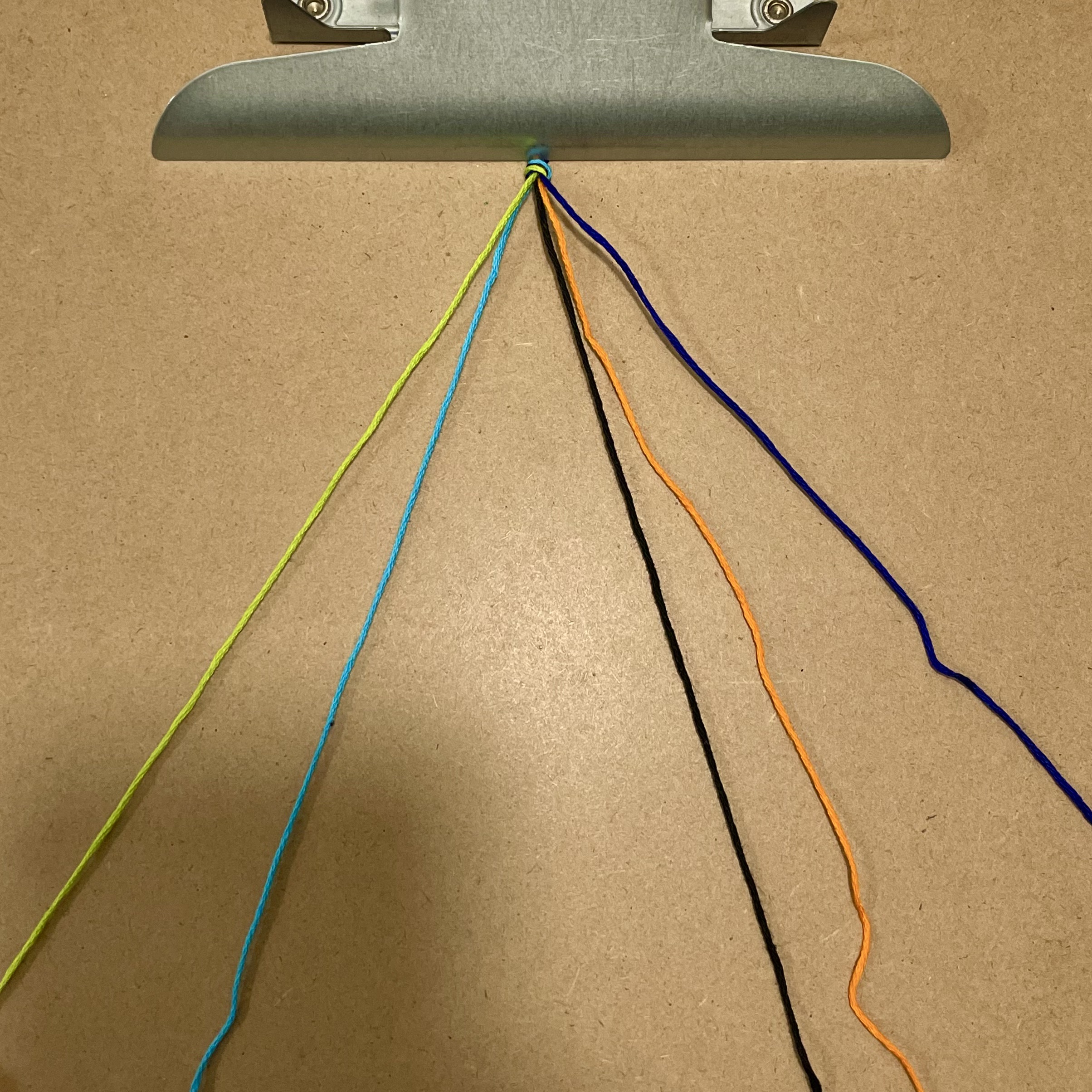
- Secure the threads by using your clipboard to clamp the section right above the knot. If you are not using a clipboard, secure your threads with tape or a binder clip to a flat surface, as appropriate.
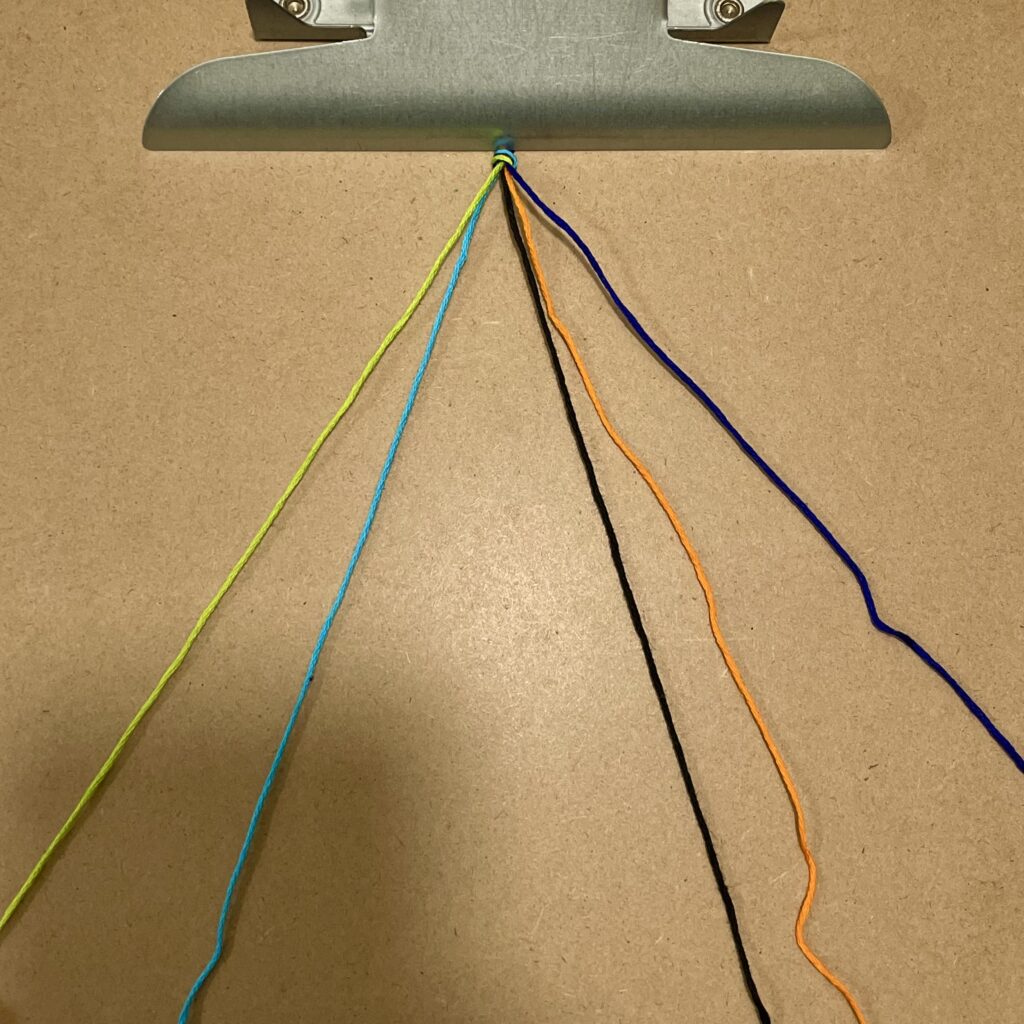
Figure 7. Step 7: Secure your threads.
- Determine how long each “day section” of your bracelet will need to be, given your wrist length and the number of days of data. The author’s wrist is approximately 7 inches in circumference, and they collected 7 days of data, so they determined that each section of their bracelet will need to be at least
7 inches ÷ 7 days = 1 inch per day.
To create a looser bracelet, the approximate length of each section will be extended to slightly longer than 1 inch.
- Plan how much variation each “day section” will require in terms of patterning, beading, and required length. For example, the author noted that for their sample user’s Wednesday data, three equally dominant moods emerged, particularly in the pattern ‘stressed – happy – stressed.’ Therefore, the bracelet section representing Wednesday will be divided into three distinct mood phases, which will result in over 0.33 inches per phase. The author also determined that having many “day sections” will require four different beads for four different goals over the week-long period, and the length of these beads will need to be taken into account when physicalizing each day.
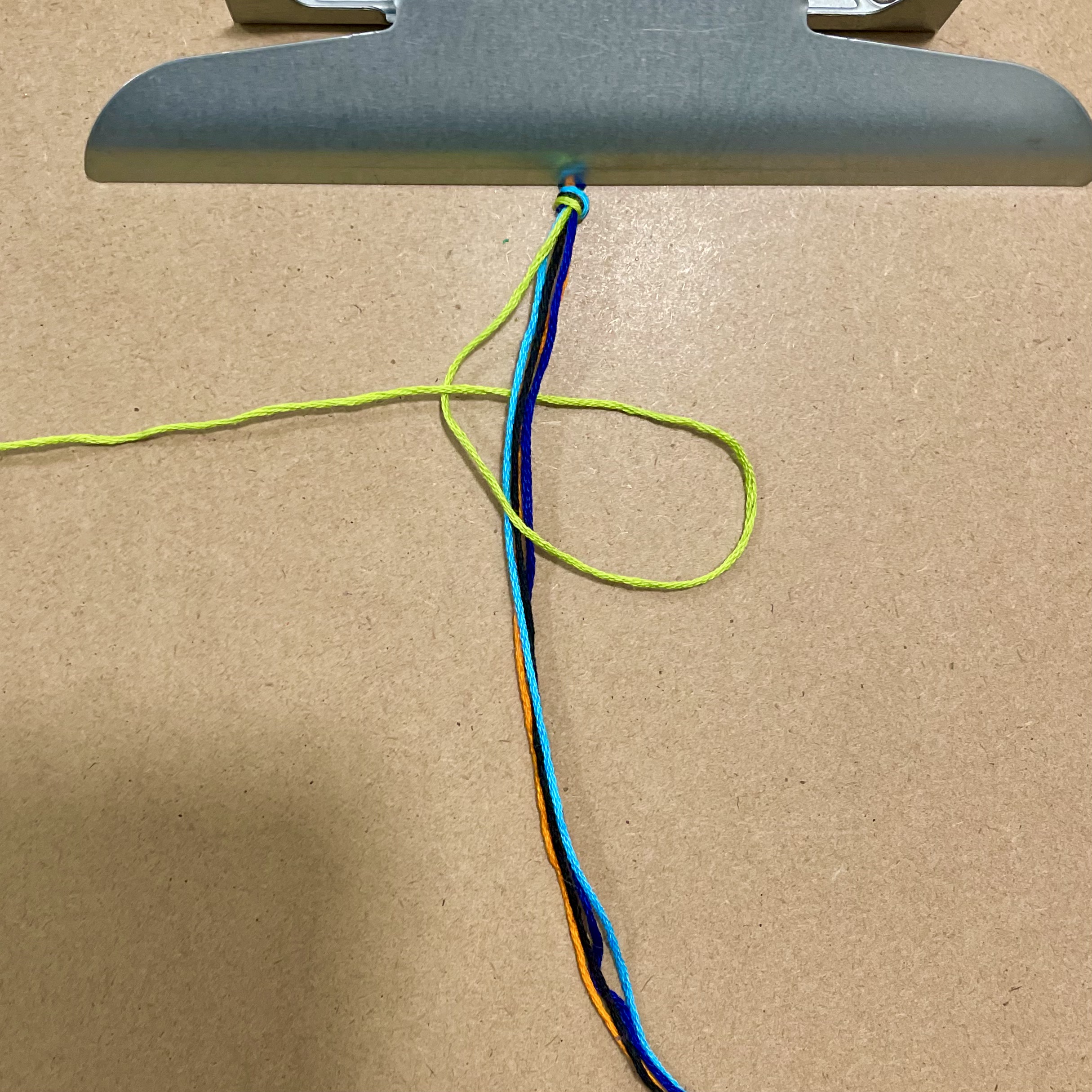
- In terms of knotting, this project will be created using a series of tight left-hand knots that will accumulate to result in a spiral-staircase look. (The creation of a left-hand knot is detailed in Figure 8. below.) To determine which thread to knot first, begin by looking at the first day of your codified data and identifying which moods are recorded. For the sample user, Sunday is entirely “neutral,” which corresponds to the color green. Thus, we will begin knotting with the green thread and sustain this color choice throughout the physicalized length for Sunday. Begin by creating your first left-hand knot, as shown in Figure 8. Make sure that the knot and all knots that follow are relatively tight.
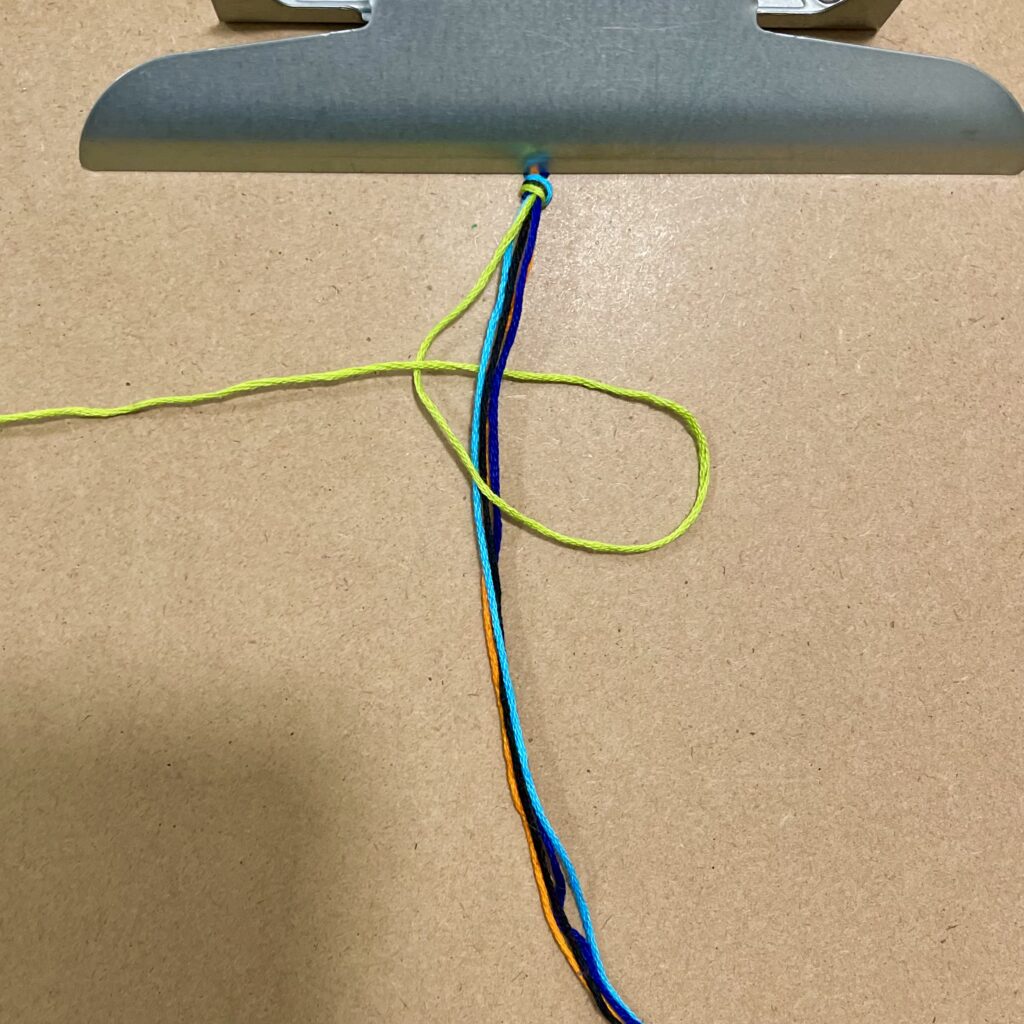
Figure 8. Step 10: Make a green left-hand knot.
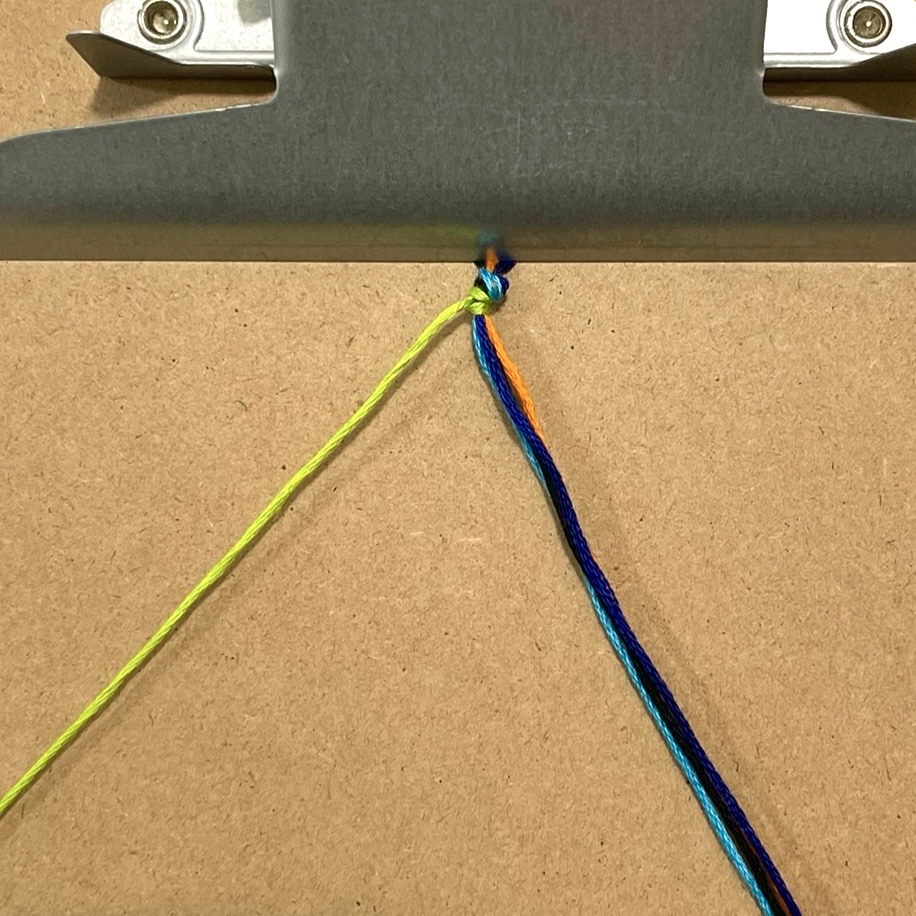
Figure 9. Step 10: Completed green left-hand knot.
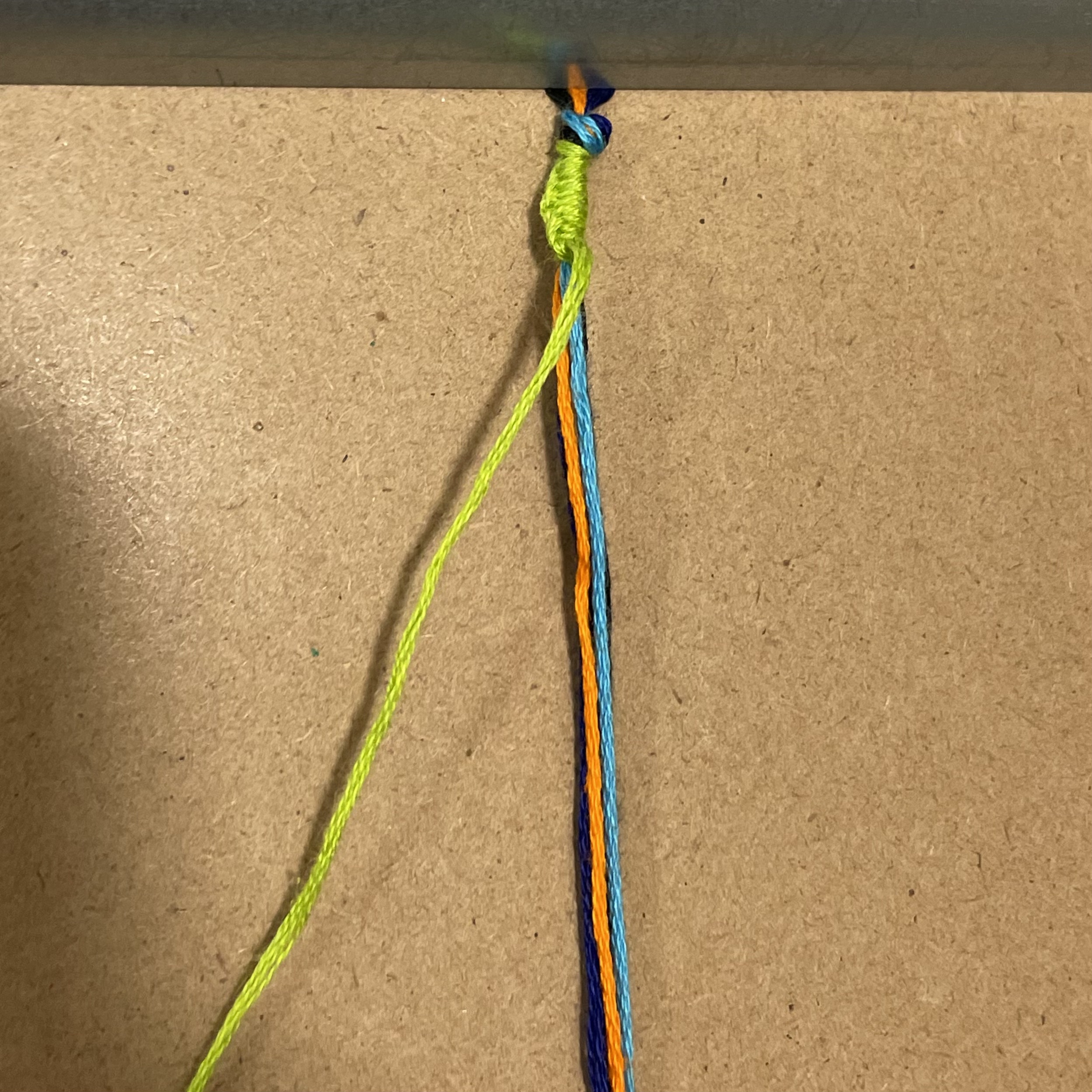
- Continue to make 9 more left-hand knots for a total of 10 left-hand knots. Note that the spiral-staircase pattern is emerging. In the next steps, we will follow these knots with goal beads for day 1, then return to 10 more left-handed knots to finish up the first “day section.”
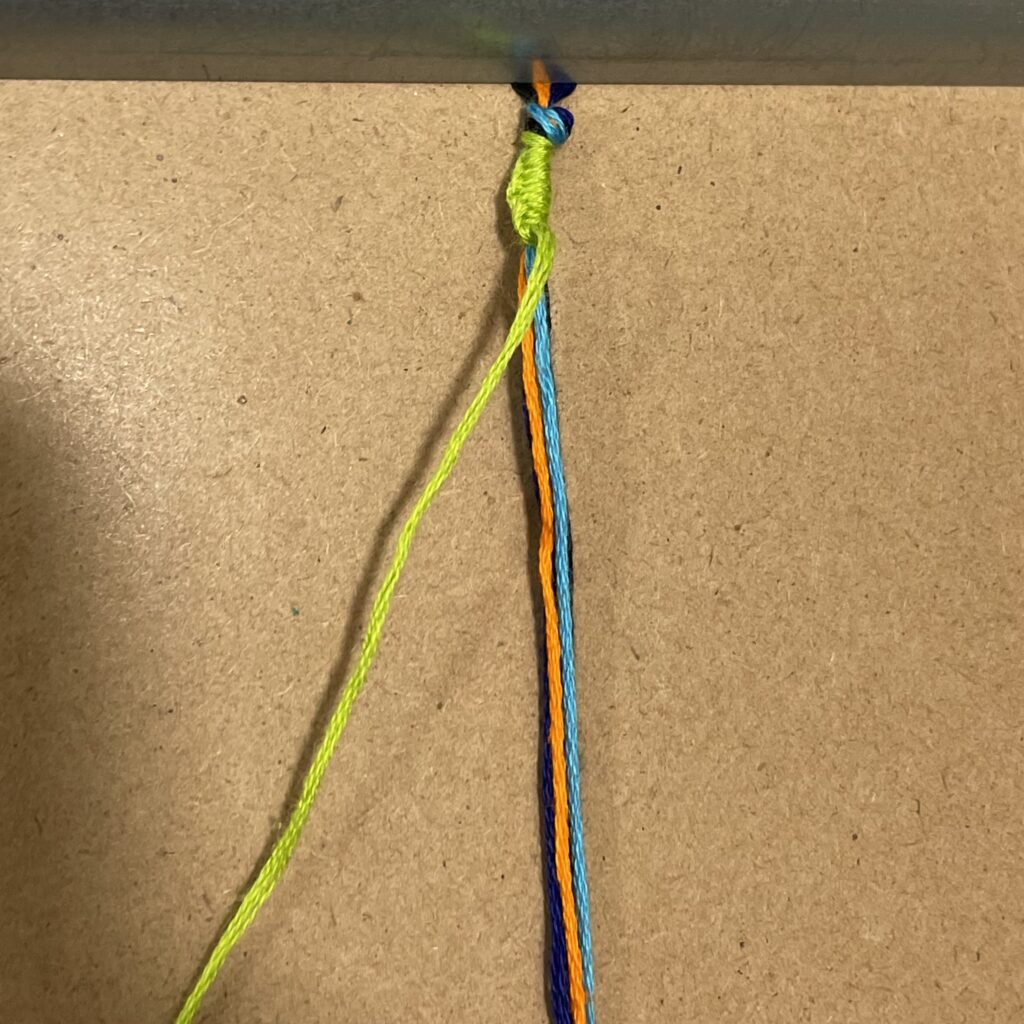
Figure 10. Step 11: Ten completed green left-hand knots.
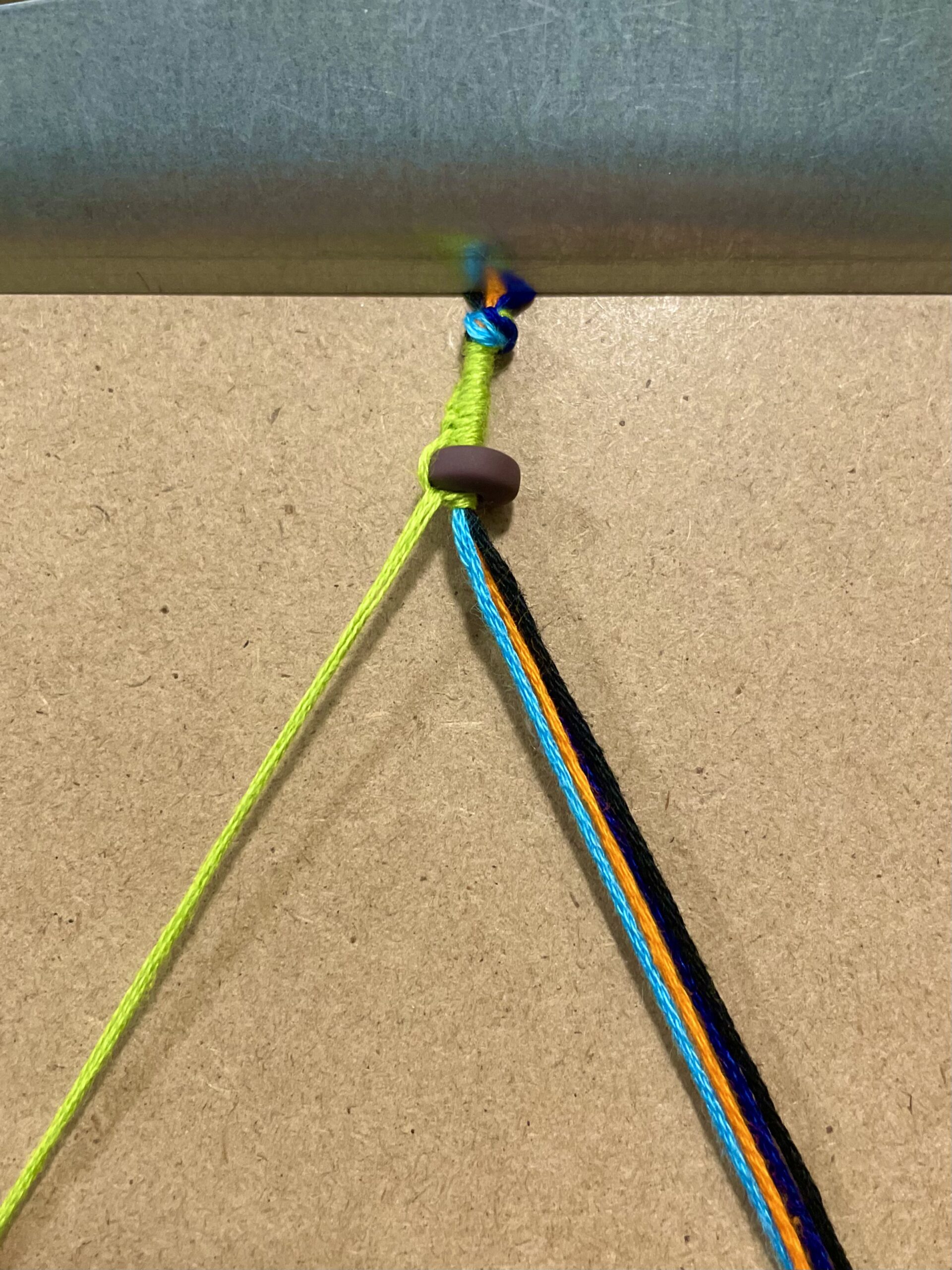
- Now we will proceed to add our first goal bead. To determine which bead to add first, begin by looking at the first day of your data and identifying which major goals are recorded. For the sample user, Sunday consists of three goals: “submit research proposal,” “work on publication 1,” and “drink water.” These goals correspond, respectively, to a brown polymer clay bead, a peachy polymer clay bead, and a small, pearly blue glass bead. We can choose to begin with any goal we prefer, in the order that is most suitable or logical for us. The author chooses to begin with the “submit research proposal” goal, represented by a brown bead. Since the hole of this bead is large, we will thread the bead onto the four non-green threads, then secure the bead with a left-hand knot made by the green thread around the remaining bundle of threads.
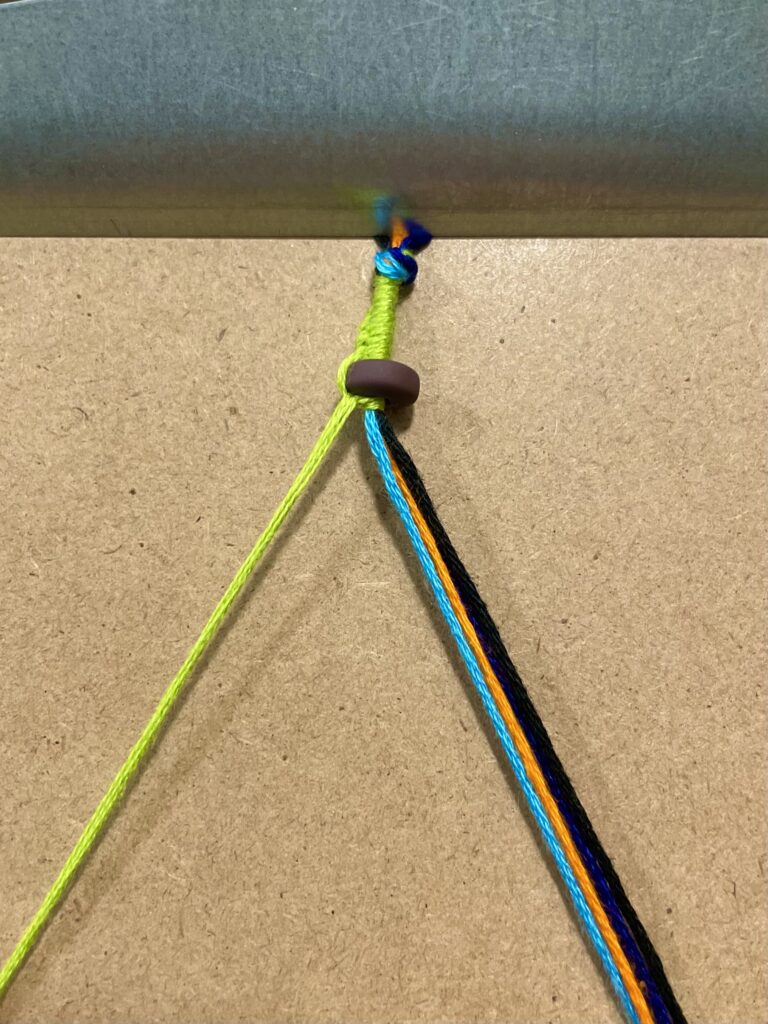
Figure 11. Step 12: Add the first goal bead, then secure it with a green left-hand knot.
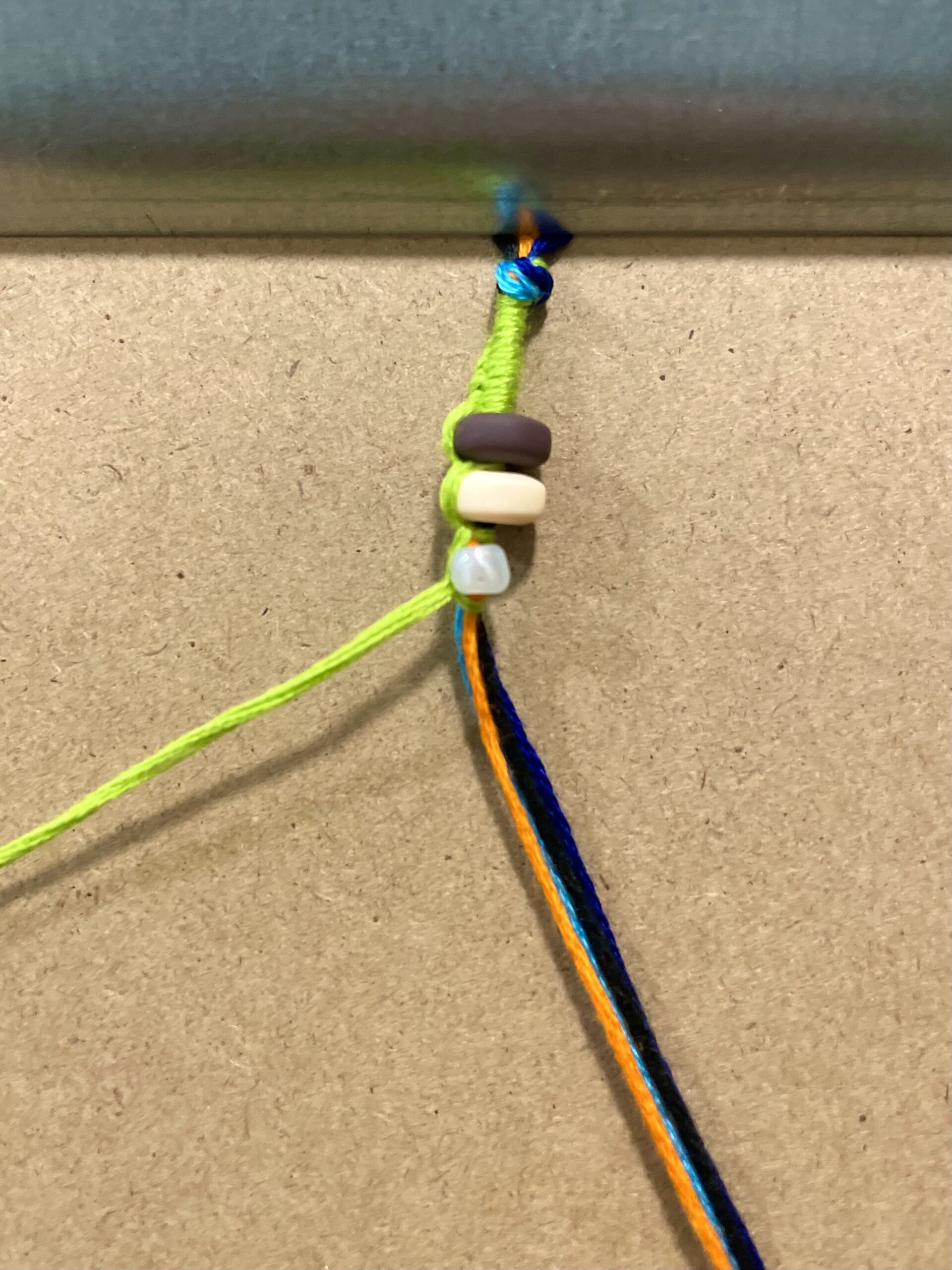
- Repeat the beading process for the remaining goals tracked in the first day.
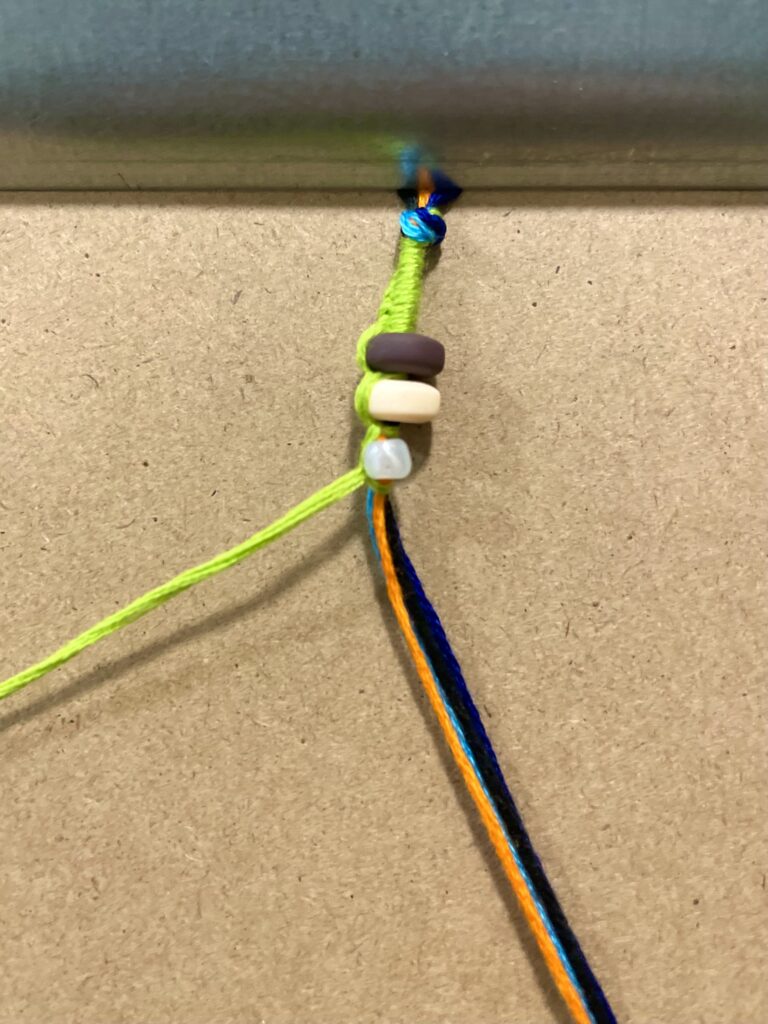
Figure 12. Step 13: Completed goal beads for day one.
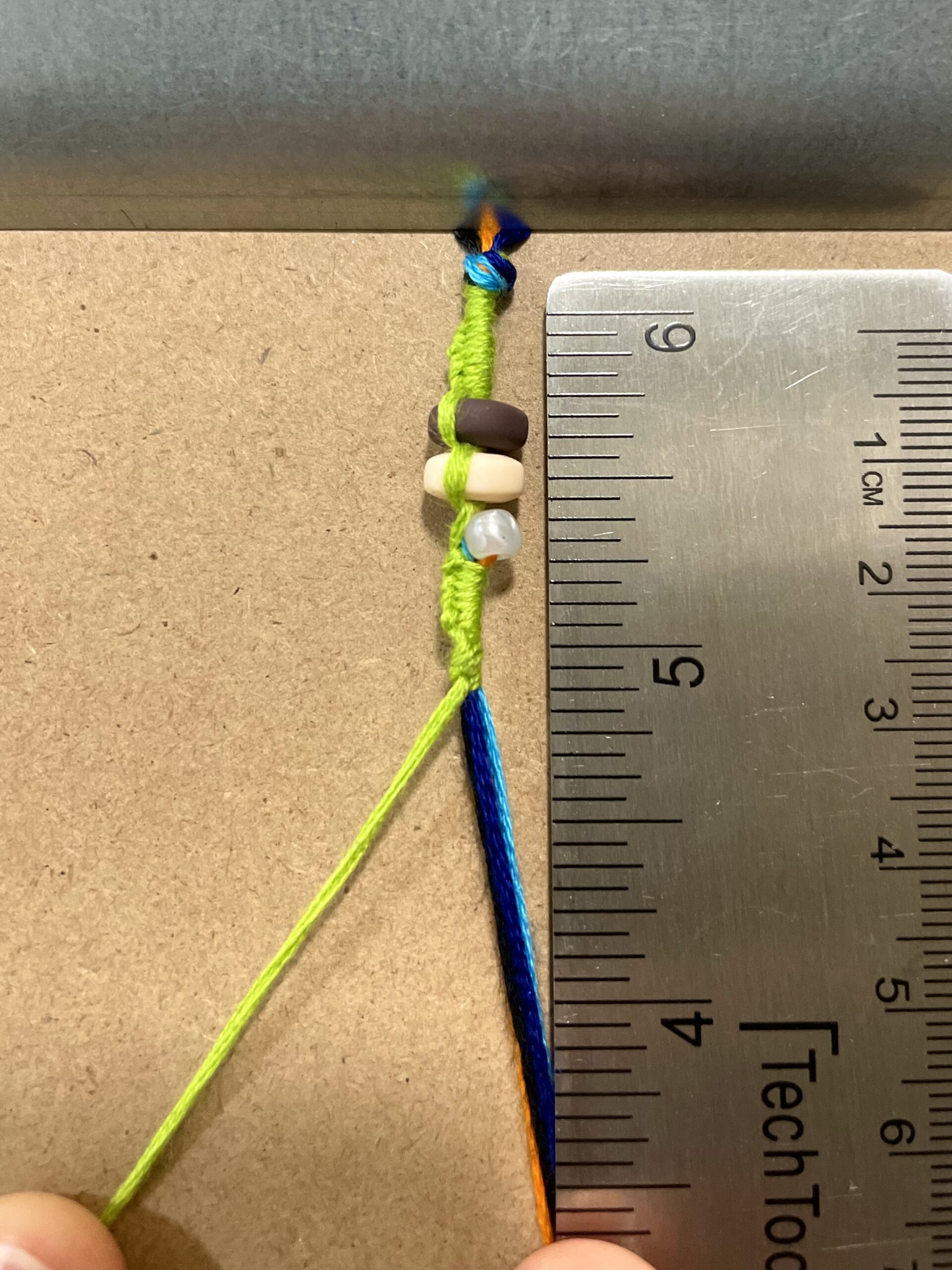
- Now that we have attached all our goal beads, complete 10 more green left-hand knots to complete the Sunday section. As shown in Figure 13., the resulting section will be just over one inch long. Please note that if the user had recorded two emotions for Sunday, they would use a different color for the next 10 knots to correspond to the second emotion.
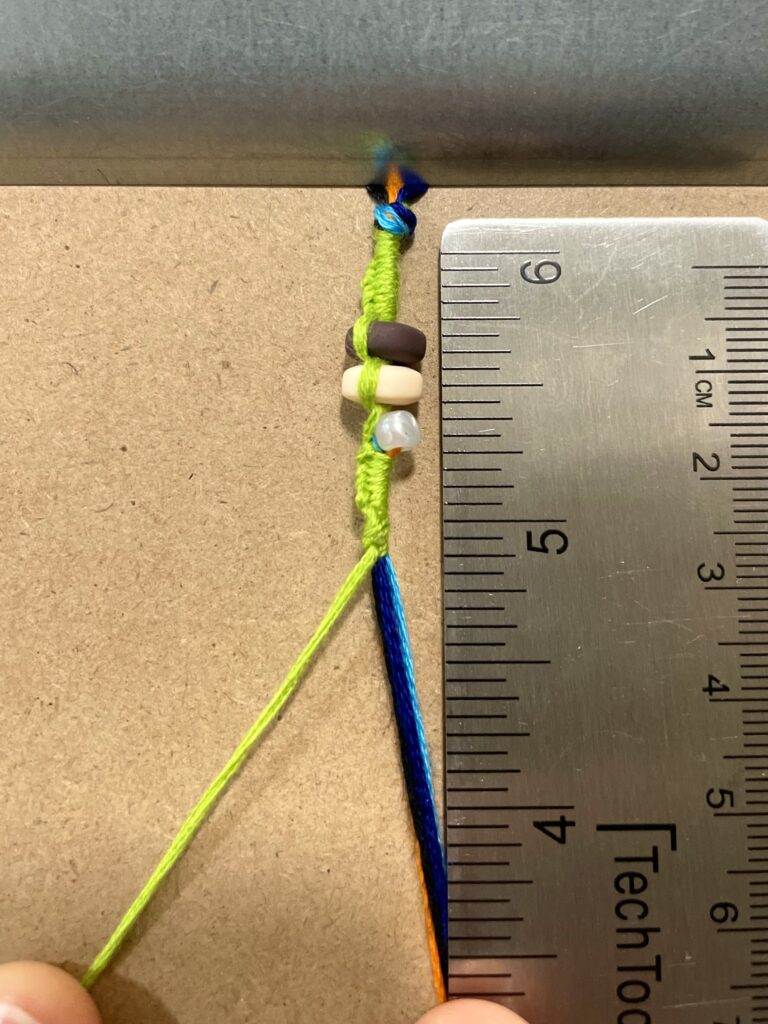
Figure 13. Step 14: Completed green left-hand knots after goal beads.
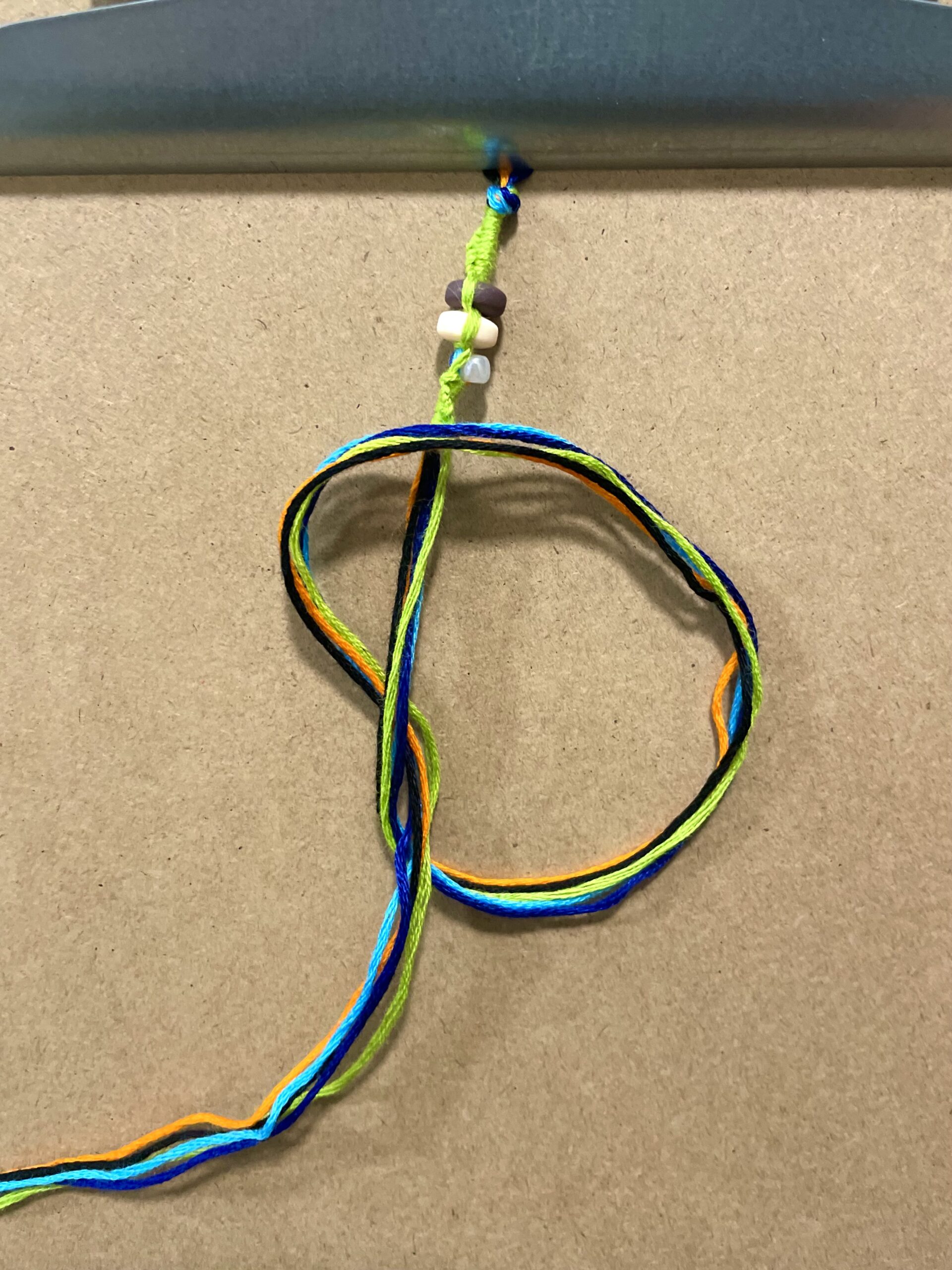
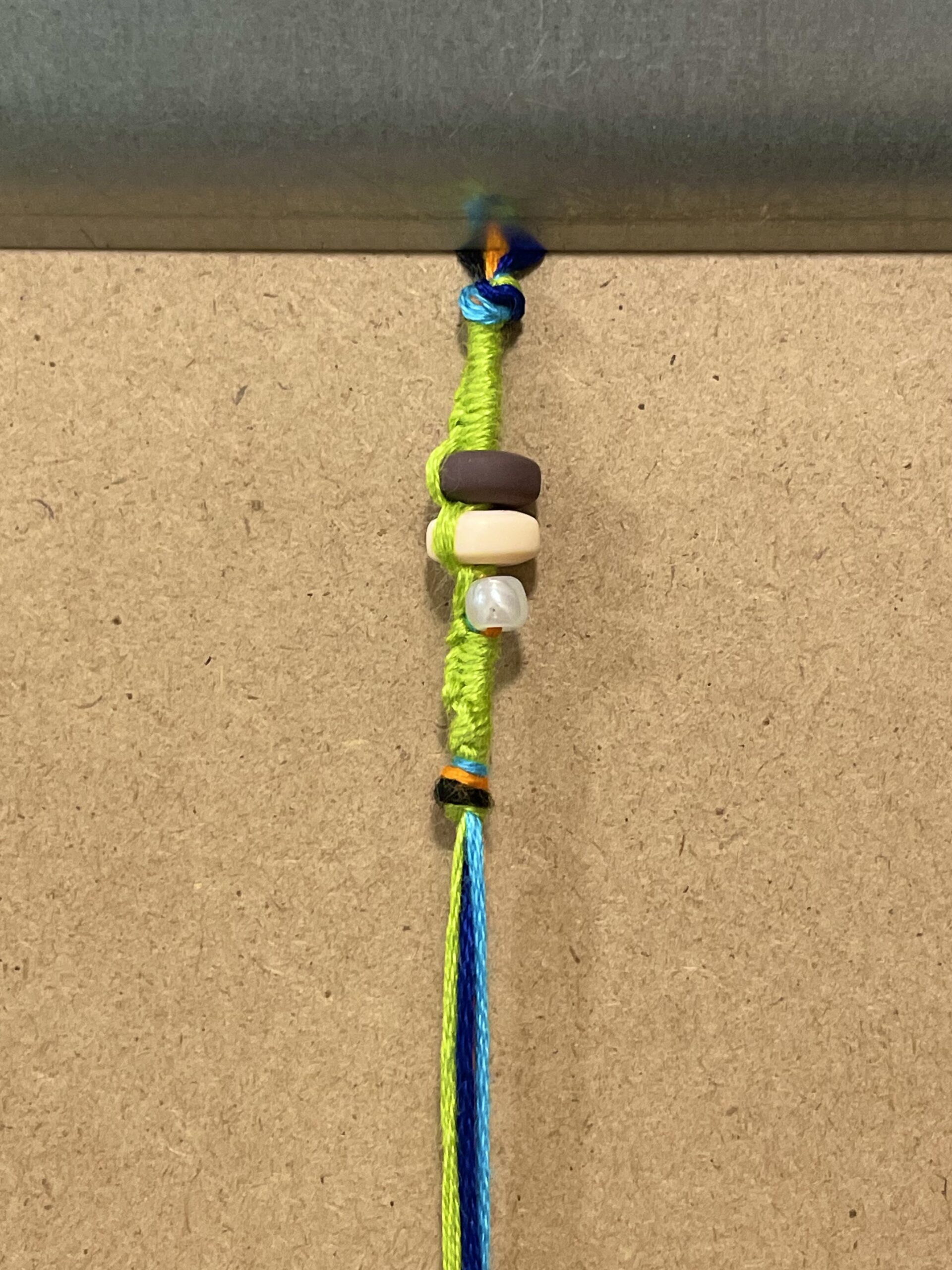
- (Optional) Before moving onto day two, complete day one by creating a large left-hand knot with all five threads. This is the same kind of knot you used to tie all the threads together in step 6. By creating a knot here, it will be easier to visually separate each day from one another.
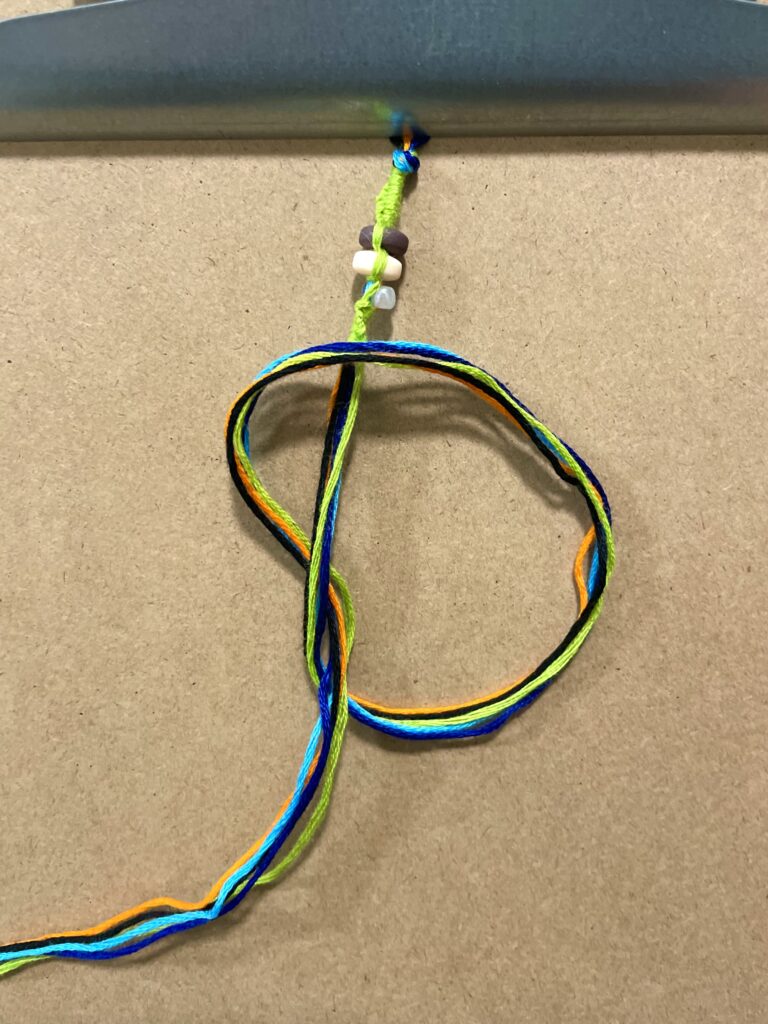
Figure 14: Step 15: Tie a large knot to represent the end of day one.
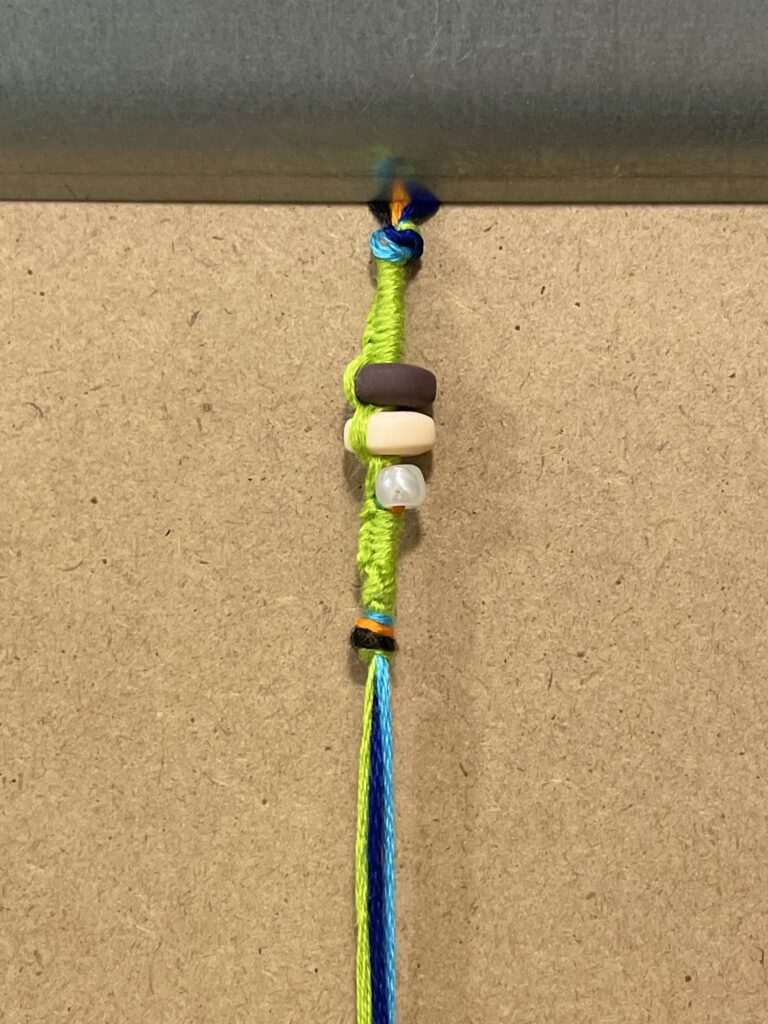
Figure 15: Completed day one, after final knot.
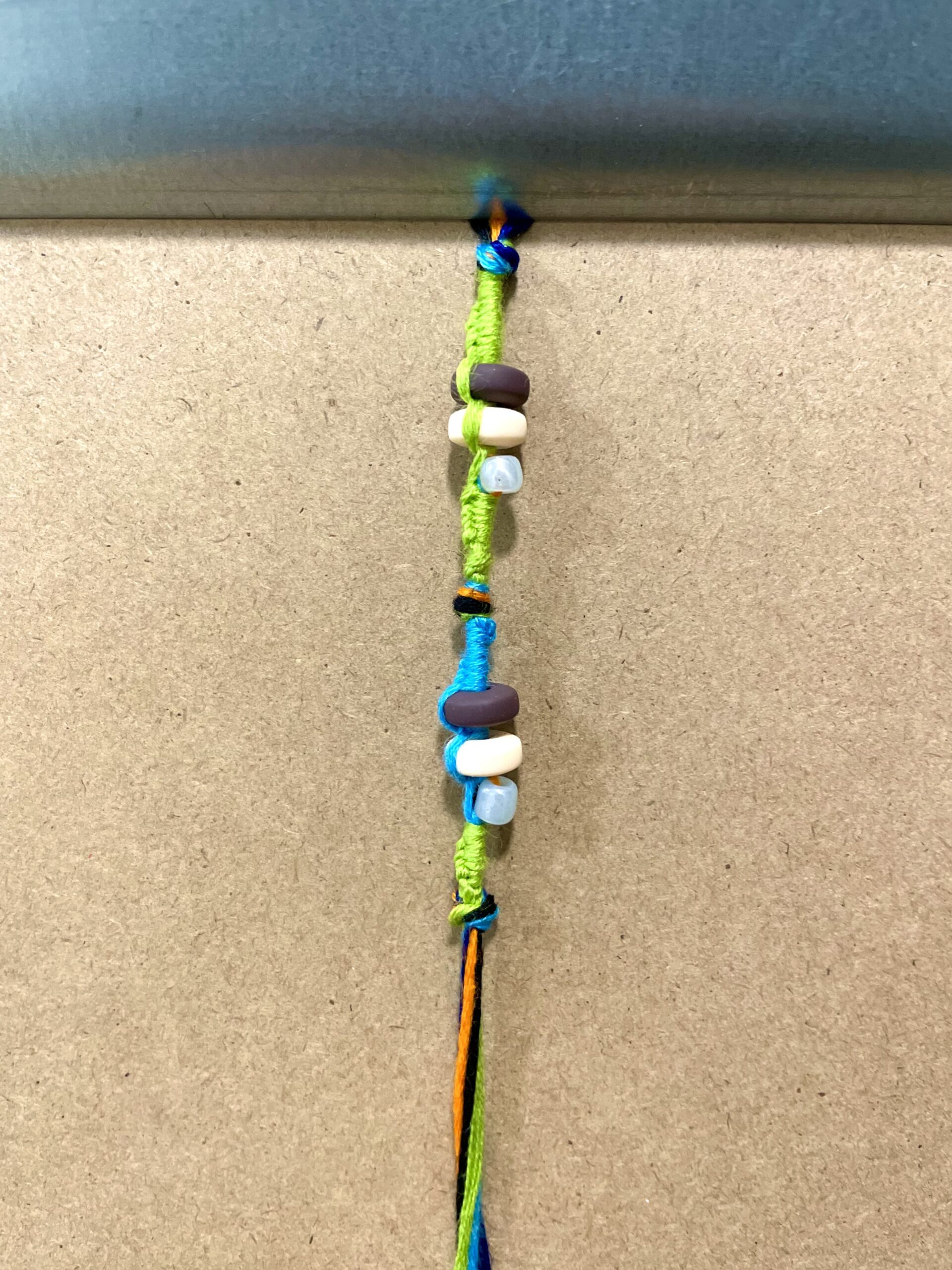
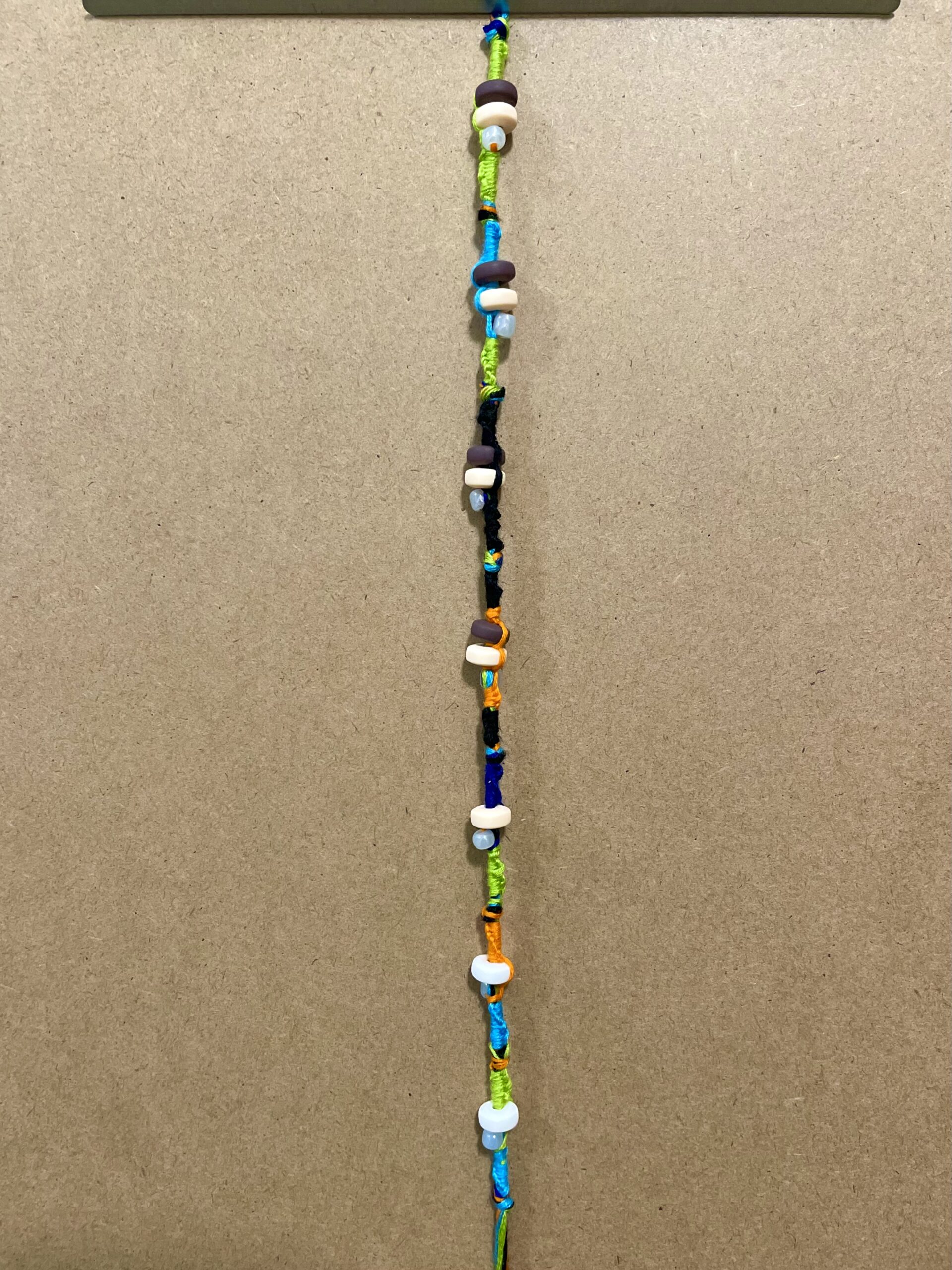
- Repeat steps 11-16 for each remaining day within the collected data, being sure to use the appropriate colors, beads, and knots in the process. Be mindful of representing multiple moods in one day. For example, for Wednesday, the user experienced three dominant moods (alternating stressed-happy-stressed), so the author made 6 left-hand black knots, then 4 left-hand orange knots, followed by goal beads, then the 4 remaining left-hand orange knots, and a final 6 left-hand black knots. This sequence and number of knots was carefully chosen to maintain the length of 20 knots that was established for Sunday.
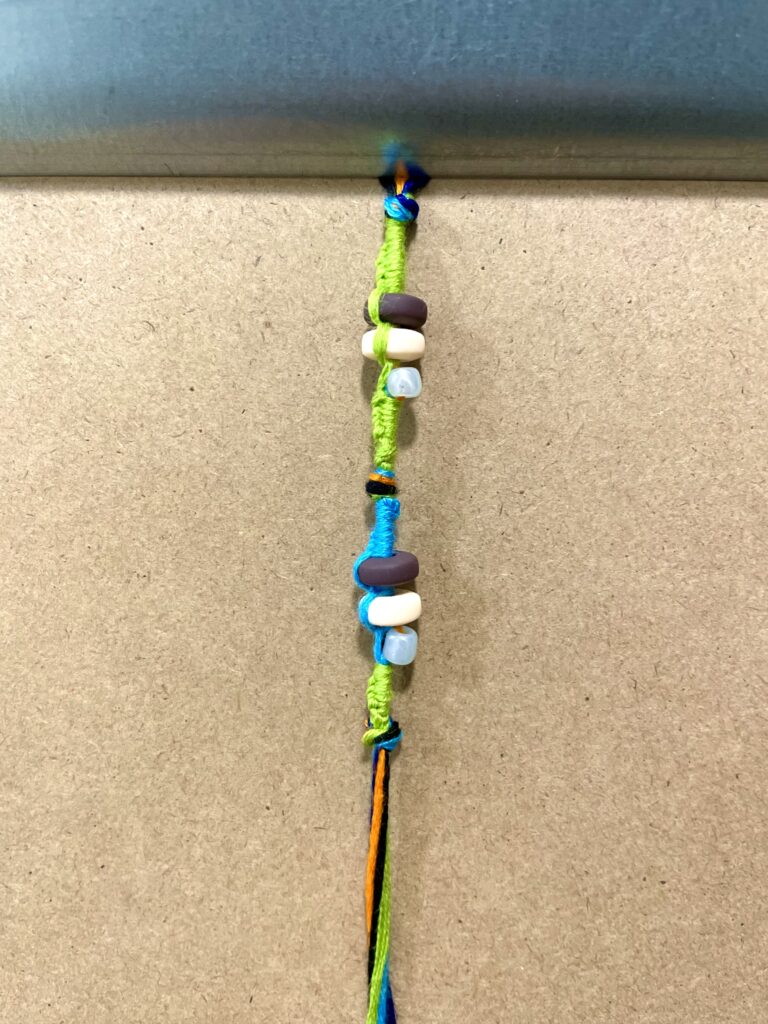
Figure 16: Step 16: Completed day one and day two.
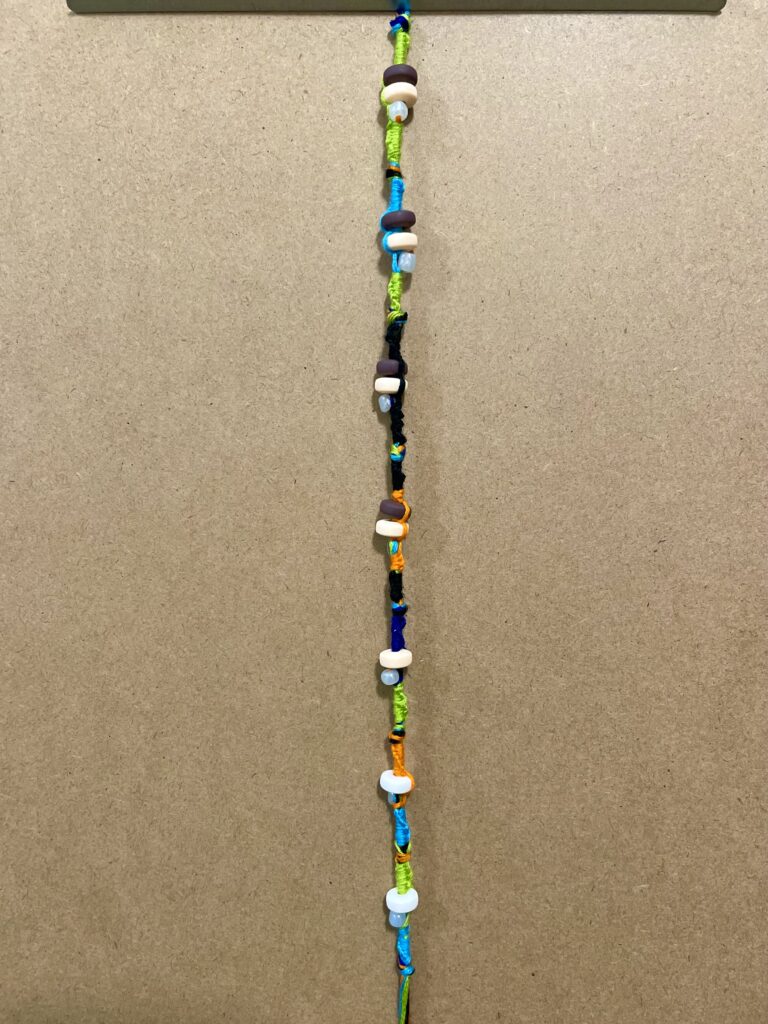
Figure 17: Step 16: Completed all seven days.
- Now that all seven days have been completed and knotted off, cut the remaining length of unused thread so that 2 inches remain for tying the bracelet together, end to end.
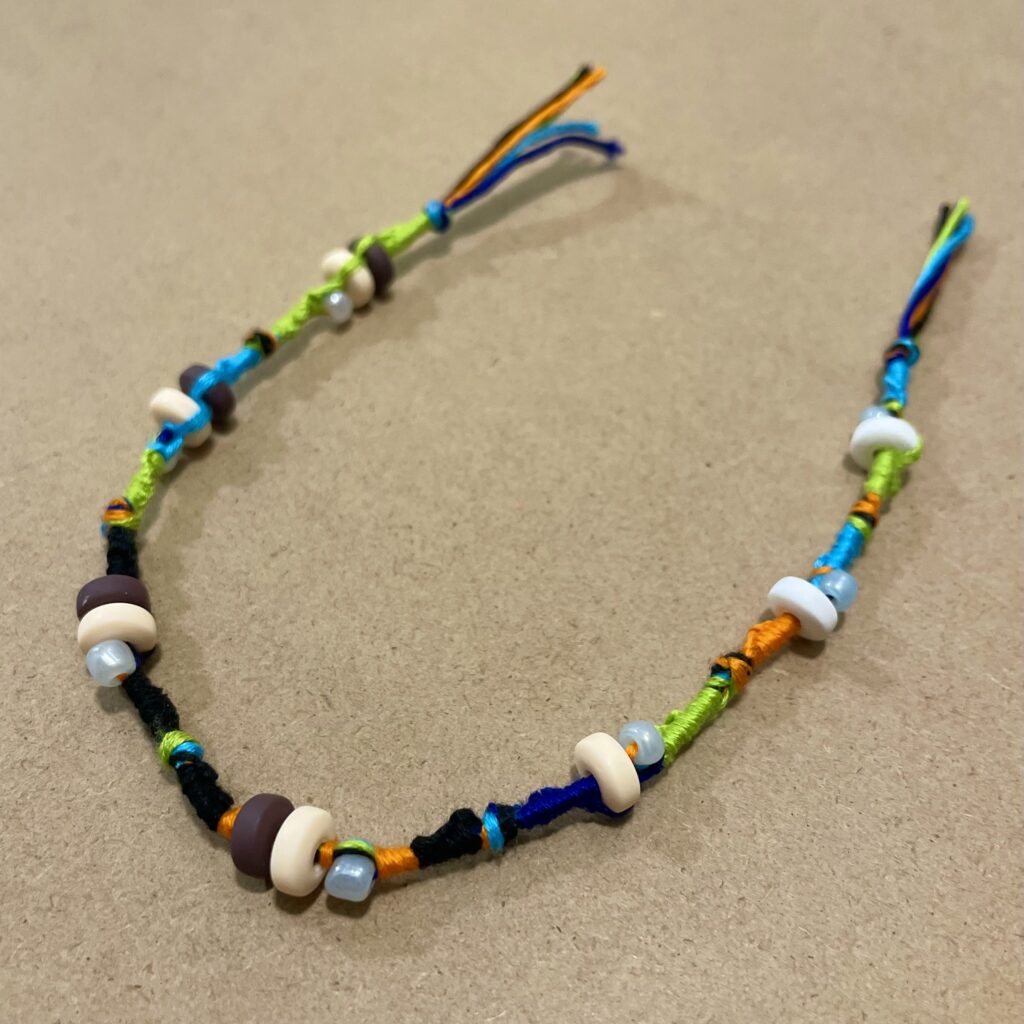
Figure 18. Step 17: Cut off the remaining thread.
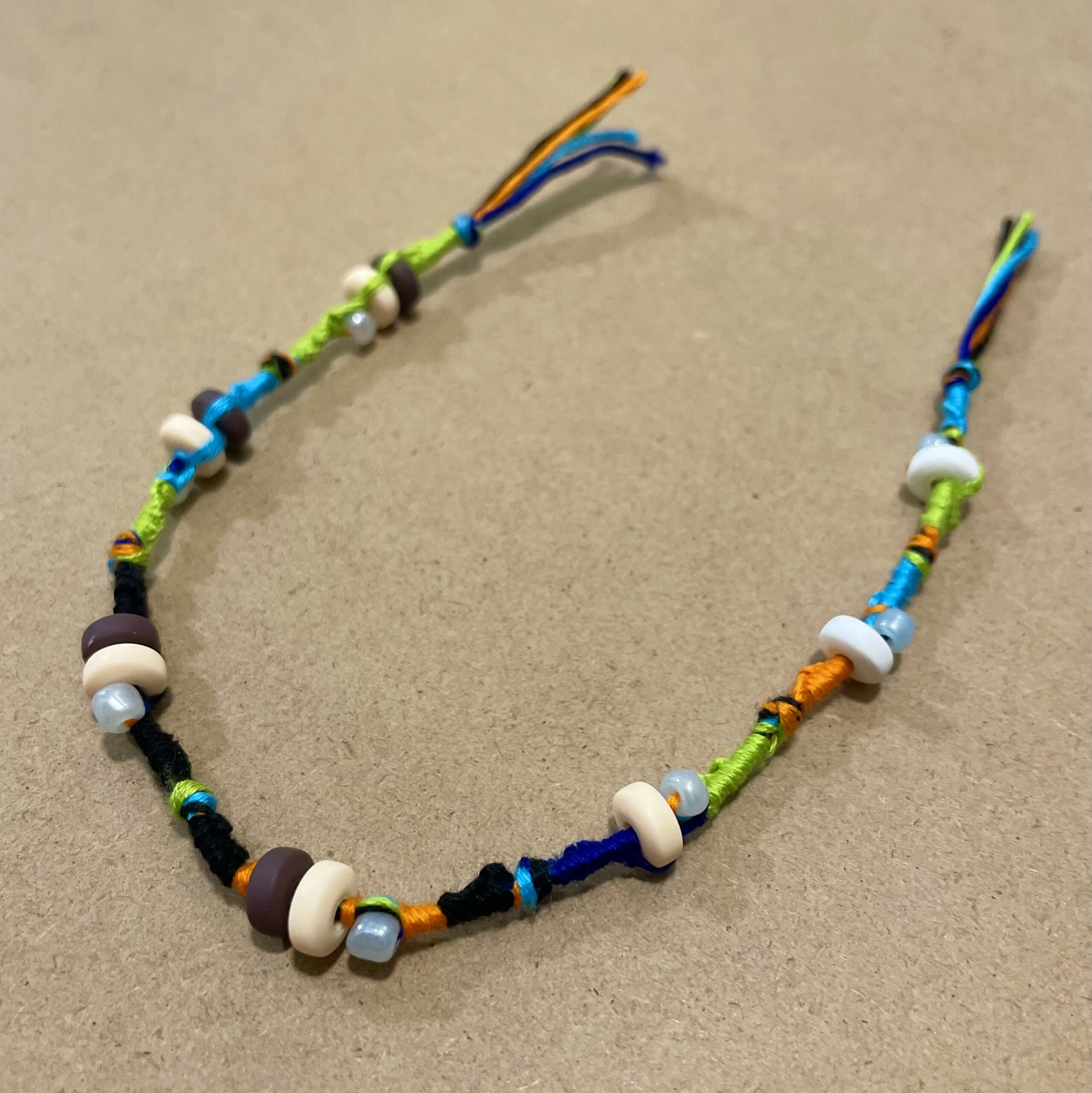
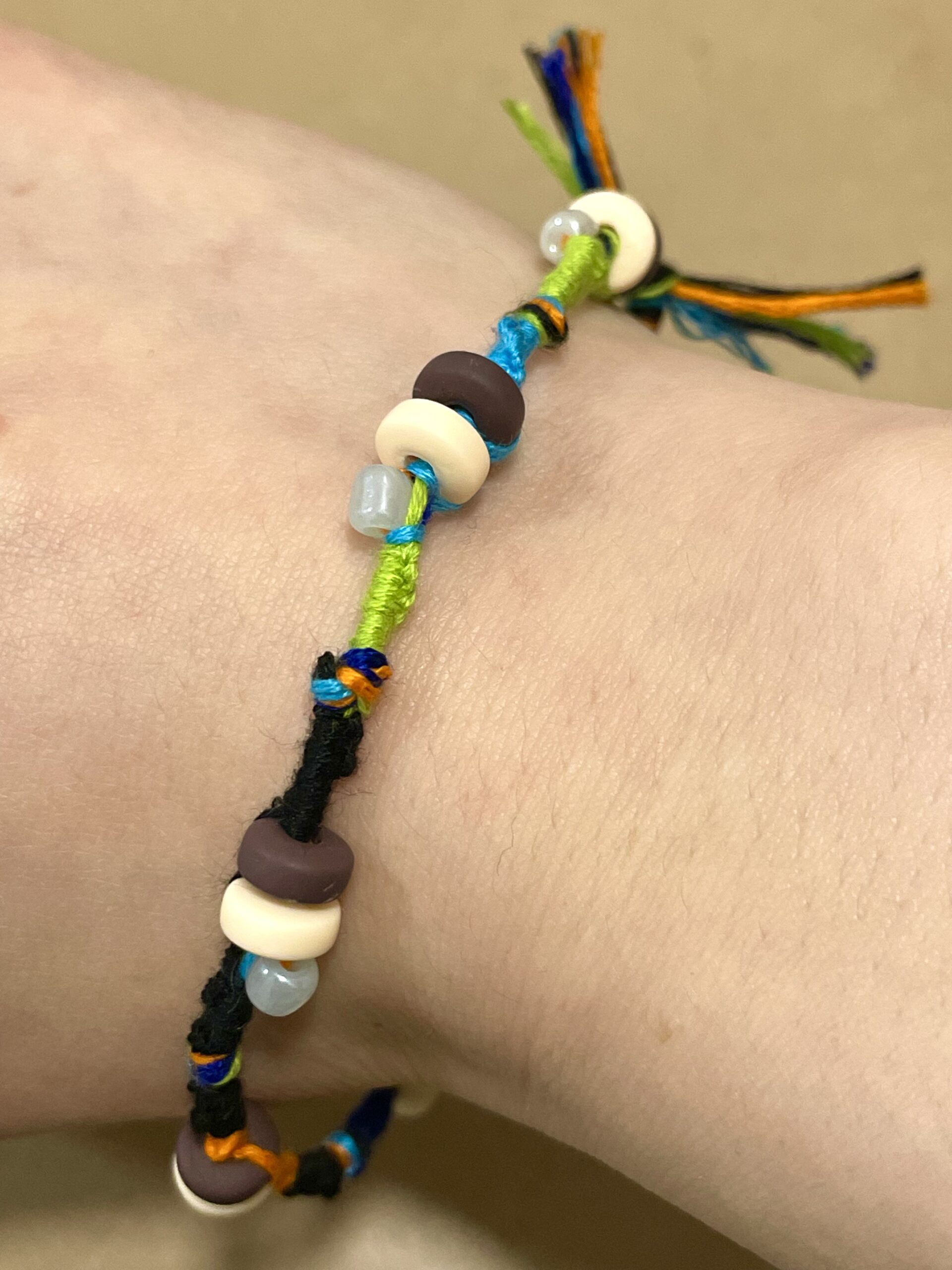
- Knot the bracelet together securely so that you have a complete bracelet! If you would like the bracelet to be tighter around your wrist, have another person tie the bracelet for you. Please note that the author ended up with a very loose bracelet that may be taken on and off. Your mnemonic bracelet is now complete! As you wear it or display it, note what questions and thoughts arise in your head. How did the creation process help you with your overarching goals? How does the bracelet work for you? What questions did the physicalization process and the bracelet answer for you? What could you do next time to better serve your needs?
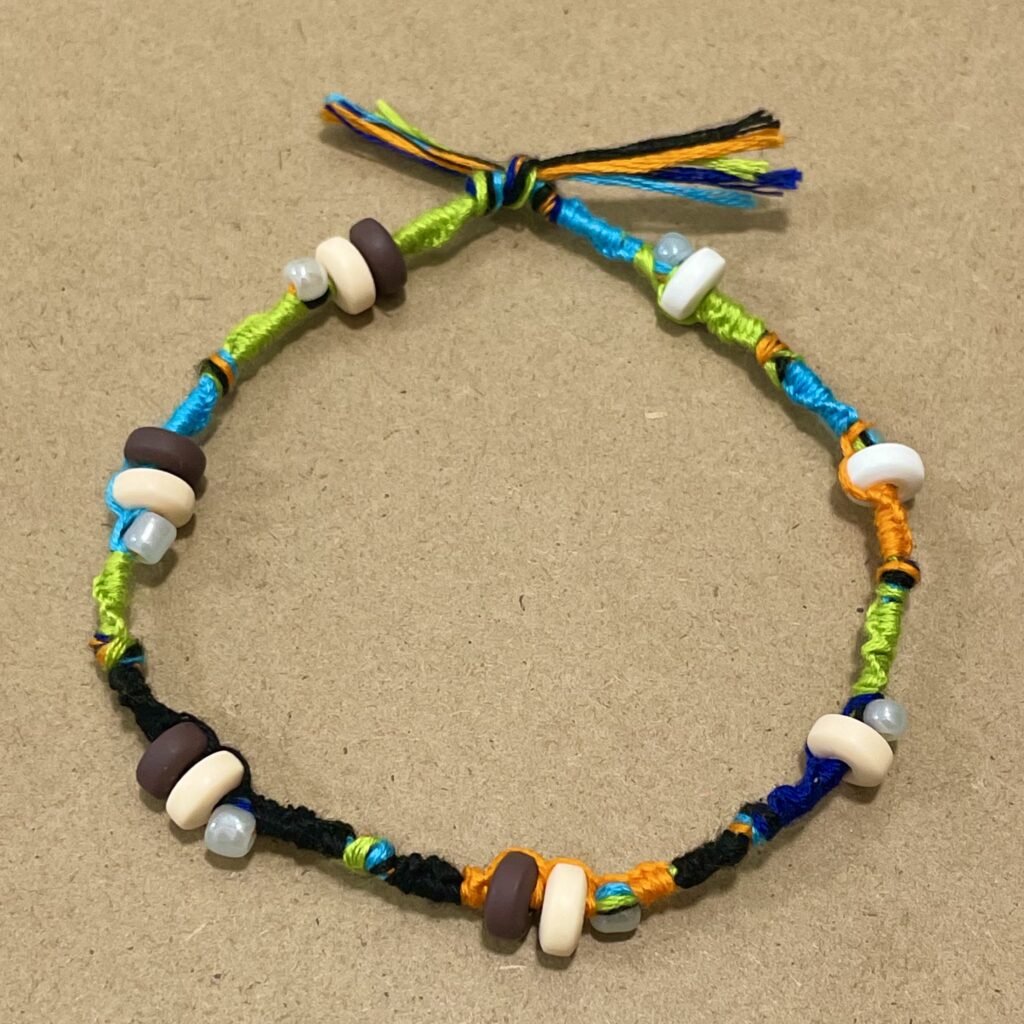
Figure 19. The finished mnemonic bracelet!
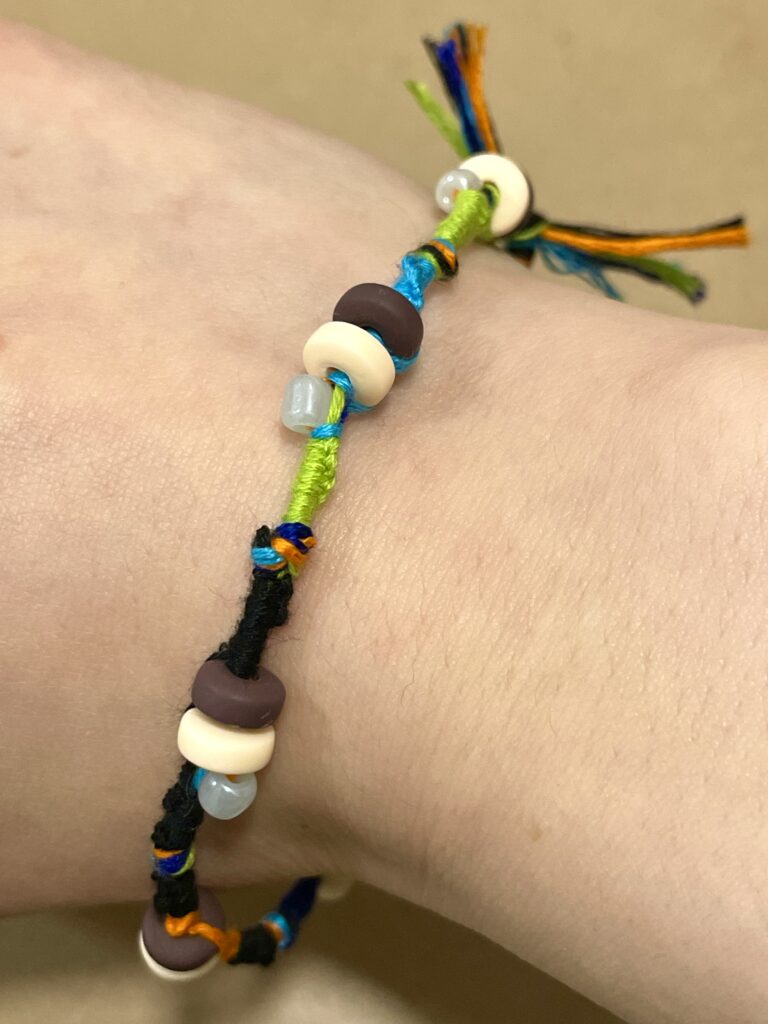
Figure 20. The finished mnemonic bracelet, worn by the author.
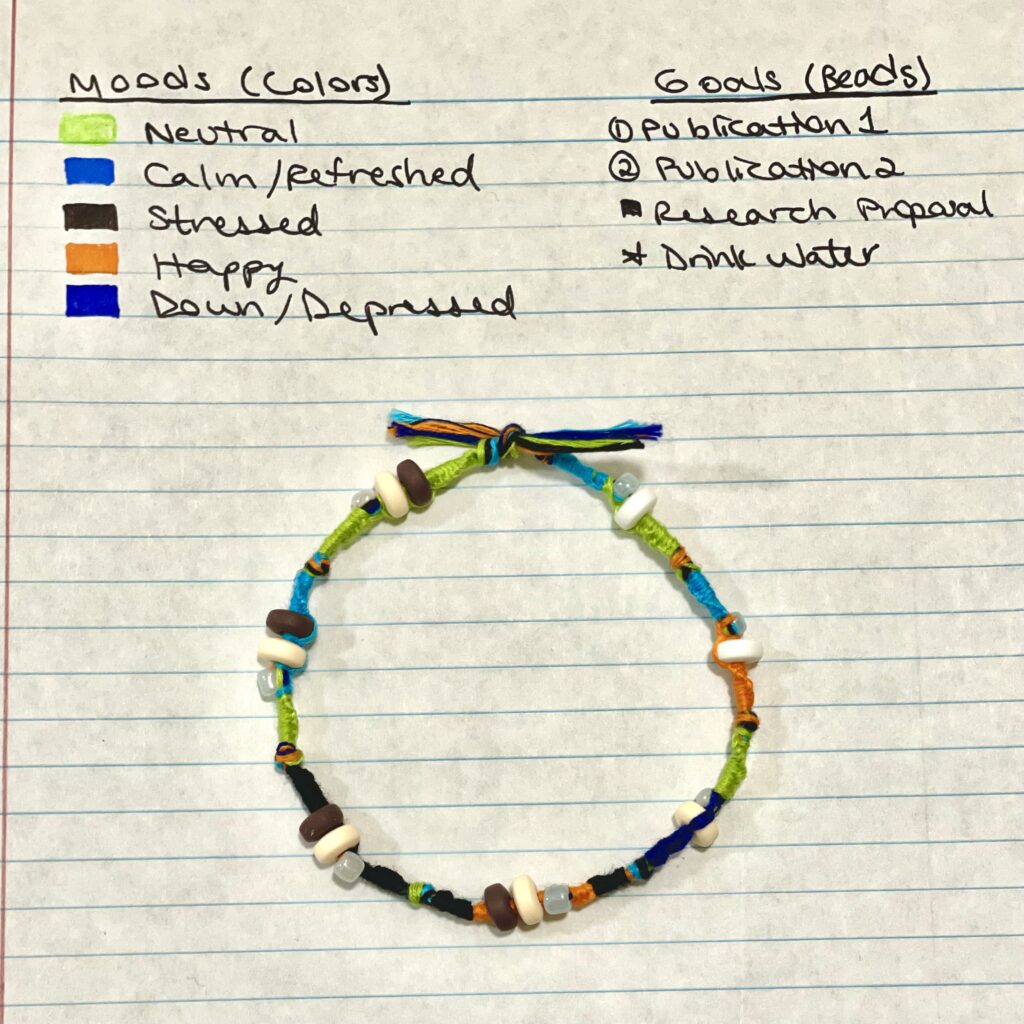
Figure 21. Visualizing early data and the mnemonic bracelet together.
Footnotes
[1] Kim Brillante Knight, “Black Ribbon for Mourning: Affective Solidarity and Feeling Very Difficult Data,” dh+lib: 2024 Special Issue (2024), https://dhandlib.org/black-ribbon-for-mourning-affective-solidarity-and-feeling-very-difficult-data/.
[2] Other names may also exist. See: Brent I. Fox and Bill G. Felkey, “The Quantified Self,” Hospital Pharmacy 51, no. 2 (2016), 189, https://doi.org/10.1310/hpj5102-189.
[3] Melanie Swan, “Quantified Self,” in Encyclopedia of Behavioral Medicine, ed. Marc D. Gellman (Springer, New York, NY, 2018), https://doi.org/10.1007/978-1-4614-6439-6_101945-1.
[4] Brent I. Fox and Bill G. Felkey, “The Quantified Self”; Huong Ly Tong et al., “The use of Mobile Apps and Fitness Trackers to Promote Healthy Behaviors during COVID-19: A Cross-Sectional Survey,” PLOS Digital Health 1, no. 8 (2022), https://doi.org/10.1371/journal.pdig.0000087.
[5] Tong, “The use of Mobile Apps and Fitness Trackers to Promote Healthy Behaviors during COVID-19: A Cross-Sectional Survey.”
[6] Shan Feng et al., “How Self-Tracking and the Quantified Self Promote Health and Well-being: Systematic Review,” Journal of Medical Internet Research 23, no. 9 (September 21, 2021), https://doi.org/10.2196/25171.
[7] Susannah Fox and Maeve Duggan, Tracking for Health, Pew Research Center, (2013), 1–40; Tong, “The use of Mobile Apps and Fitness Trackers to Promote Healthy Behaviors during COVID-19: A Cross-Sectional Survey.”
[8] Małgorzata Krzeczkowska et al., “Comprehensive Review of Mnemonic Devices and their Applications: State of the Art,” International E-Journal of Science Medicine & Education 9, no. 3 (December, 2015), 4–9, https://doi.org/10.56026/imu.9.3.4; Martin Dresler et al., “Mnemonic Training Reshapes Brain Networks to Support Superior Memory,” Neuron 93, no. 5 (March 8, 2018), 1227–1235, https://doi.org/10.1016/j.neuron.2017.02.003.
[9] James Bigelow and Amy Poremba, “Achilles’ Ear? Inferior Human Short-Term and Recognition Memory in the Auditory Modality,” PLoS ONE 9, no. 2 (February 26, 2014), 1–8, https://doi.org/10.1371/journal.pone.0089914; Ling Leh Qing et al., “Visual, Tactile and Auditory Memory: Any Difference between Students?” Journal of Psychology and Social Health 3 (December 1, 2019), 24–29.
[10] Nigel Morgan and Annette Pritchard, “On Souvenirs and Metonymy,” Tourist Studies 5, no. 1 (April 1, 2005), 29–53, https://doi.org/10.1177/1468797605062714; Sherry Schofield-Tomschin and Mary A. Littrell, “Textile Handcraft Guild Participation: A Conduit to Successful Aging,” Clothing and Textiles Research Journal 19, no. 2 (March, 2001), 41–51, https://doi.org/10.1177/0887302X0101900201; Sinikka Hannele Pöllänen and Reetta Marja Hirsimäki, “Crafts as Memory Triggers in Reminiscence: A Case Study of Older Women with Dementia,” Occupational Therapy in Health Care 28, no. 4 (September 2, 2014), 410–430, https://doi.org/10.3109/07380577.2014.941052.
[11] Marte S. Gulliksen, “Embodied Making, Creative Cognition and Memory,” FormAkademisk: Forskningstidsskrift for Design og Designdidaktikk 9, no. 1 (June 21, 2016), 1–19, https://doi.org/10.7577/formakademisk.1487.
[12] Gulliksen, “Embodied Making, Creative Cognition and Memory.”
[13] Gulliksen, “Embodied Making, Creative Cognition and Memory.”
[14] Evan F. Risko and Sam J. Gilbert, “Cognitive Offloading,” Trends in Cognitive Sciences 20, no. 9 (September, 2016), 676–688, https://doi.org/10.1016/j.tics.2016.07.002. For more information on cognitive offloading, see also: Lauren L. Richmond and Ryan G. Taylor, “The Benefits and Potential Costs of Cognitive Offloading for Retrospective Information,” Nature Reviews Psychology 4, no. 5 (March 17, 2025), 312–321, https://doi.org/10.1038/s44159-025-00432-2.
[15] Users may choose to track these metrics digitally, if preferred. The author chose physical tracking methods for the project delineated in this paper.
[16] A user’s color choices are personal preferences but may be informed by color psychology and symbolism. For more information on color psychology and correlations between colors and emotions, check out sources such as the following: Christof Kuhbandner and Reinhard Pekrun, “Joint Effects of Emotion and Color on Memory,” Emotion 13, no. 3 (March 25, 2013), 375, https://doi.org/10.1037/a0031821; Laura Dilloway, An Exploration into Colour Symbolism as Used by Different Cultures and Religions, National Centre for Computer Animation, (2006); Mitsuhiko Hanada, “Correspondence Analysis of Color–emotion Associations,” Color Research & Application 43, no. 2 (August 30, 2017), 224, https://doi.org/10.1002/col.22171.
[17] Users may choose to track these metrics digitally, if preferred.
[18] For users choosing to track metrics digitally, 7 different colors should be chosen and incorporated in a digital format.
Bibliography
Bigelow, James and Amy Poremba. “Achilles’ Ear? Inferior Human Short-Term and Recognition Memory in the Auditory Modality.” PLoS ONE 9, no. 2 (February 26, 2014): 1–8. https://doi.org/10.1371/journal.pone.0089914.
Dilloway, Laura. An Exploration into Colour Symbolism as used by Different Cultures and Religions: National Centre for Computer Animation, 2006.
Dresler, Martin, William R. Shirer, Boris N. Konrad, et al. “Mnemonic Training Reshapes Brain Networks to Support Superior Memory.” Neuron 93, no. 5 (March 8, 2018): 1227–1235. https://doi.org/10.1016/j.neuron.2017.02.003.
Feng, Shan, Matti Mäntymäki, Amandeep Dhir, and Hannu Salmela. “How Self-Tracking and the Quantified Self Promote Health and Well-being: Systematic Review.” Journal of Medical Internet Research 23, no. 9 (September 21, 2021). https://doi.org/10.2196/25171.
Fox, Brent I. and Bill G. Felkey. “The Quantified Self.” Hospital Pharmacy 51, no. 2 (February, 2016): 189. https://doi.org/10.1310/hpj5102-189.
Fox, Susannah and Maeve Duggan. Tracking for Health: Pew Research Center, 2013.
Gulliksen, Marte S. “Embodied Making, Creative Cognition and Memory.” FormAkademisk: Forskningstidsskrift for Design og Designdidaktikk 9, no. 1 (June 21, 2016): 1–19. https://doi.org/10.7577/formakademisk.1487.
Hanada, Mitsuhiko. “Correspondence Analysis of Color–Emotion Associations.” Color Research and Application 43, no. 2 (August 30, 2017): 224. https://doi.org/10.1002/col.22171.
Knight, Kim Brillante. “Black Ribbon for Mourning: Affective Solidarity and Feeling Very Difficult Data.” dh+lib: 2024 Special Issue (April 29, 2024). https://dhandlib.org/black-ribbon-for-mourning-affective-solidarity-and-feeling-very-difficult-data/.
Krzeczkowska, Małgorzata, Kamil Jurowski, and Anna Jurowska. “Comprehensive Review of Mnemonic Devices and their Applications: State of the Art.” International E-Journal of Science Medicine & Education 9, no. 3 (December, 2015): 4–9. https://doi.org/10.56026/imu.9.3.4.
Kuhbandner, Christof and Reinhard Pekrun. “Joint Effects of Emotion and Color on Memory.” Emotion 13, no. 3 (March 25, 2013): 375. https://doi.org/10.1037/a0031821.
Leh Qing, Ling, Kellin Wong Kai Xin, Lim Chin Fen, Treshia Tapui, Toh Bing Zhao, and Chua Bee Seok. “Visual, Tactile and Auditory Memory: Any Difference between Students?” Journal of Psychology and Social Health 3, (December 1, 2019): 24–29.
Morgan, Nigel and Annette Pritchard. “On Souvenirs and Metonymy.” Tourist Studies 5, no. 1 (April 1, 2005): 29–53. https://doi.org/10.1177/1468797605062714.
Pöllänen, Sinikka Hannele and Reetta Marja Hirsimäki. “Crafts as Memory Triggers in Reminiscence: A Case Study of Older Women with Dementia.” Occupational Therapy in Health Care 28, no. 4 (September 2, 2014): 410–430. https://doi.org/10.3109/07380577.2014.941052.
Richmond, Lauren L. and Ryan G. Taylor. “The Benefits and Potential Costs of Cognitive Offloading for Retrospective Information.” Nature Reviews Psychology 4, no. 5 (March 17, 2025): 312–321. https://doi.org/10.1038/s44159-025-00432-2.
Risko, Evan F. and Sam J. Gilbert. “Cognitive Offloading.” Trends in Cognitive Sciences 20, no. 9 (September, 2016): 676–688. https://doi.org/10.1016/j.tics.2016.07.002.
Schofield-Tomschin, Sherry and Mary A. Littrell. “Textile Handcraft Guild Participation: A Conduit to Successful Aging.” Clothing and Textiles Research Journal 19, no. 2 (March, 2001): 41–51. https://doi.org/10.1177/0887302X0101900201.
Swan, Melanie. “Quantified Self.” In Encyclopedia of Behavioral Medicine, edited by Gellman, Marc D. Springer, New York, NY, 2018. https://doi.org/10.1007/978-1-4614-6439-6_101945-1.
Tong, Huong Ly, Carol Maher, Kate Parker, et al. “The use of Mobile Apps and Fitness Trackers to Promote Healthy Behaviors during COVID-19: A Cross-Sectional Survey.” PLOS Digital Health 1, no. 8 (August 18, 2022). https://doi.org/10.1371/journal.pdig.0000087.

Ruth S. Xing
Ruth S. Xing is a Research & Instruction Librarian at UConn Library - Stamford. Ruth holds an MS in Library and Information Science from Syracuse University and dual BA degrees in Psychology and English from Cornell University.